MusclesMuscles of the lower limb
Fibularis longus muscle
Musculus fibularis longus
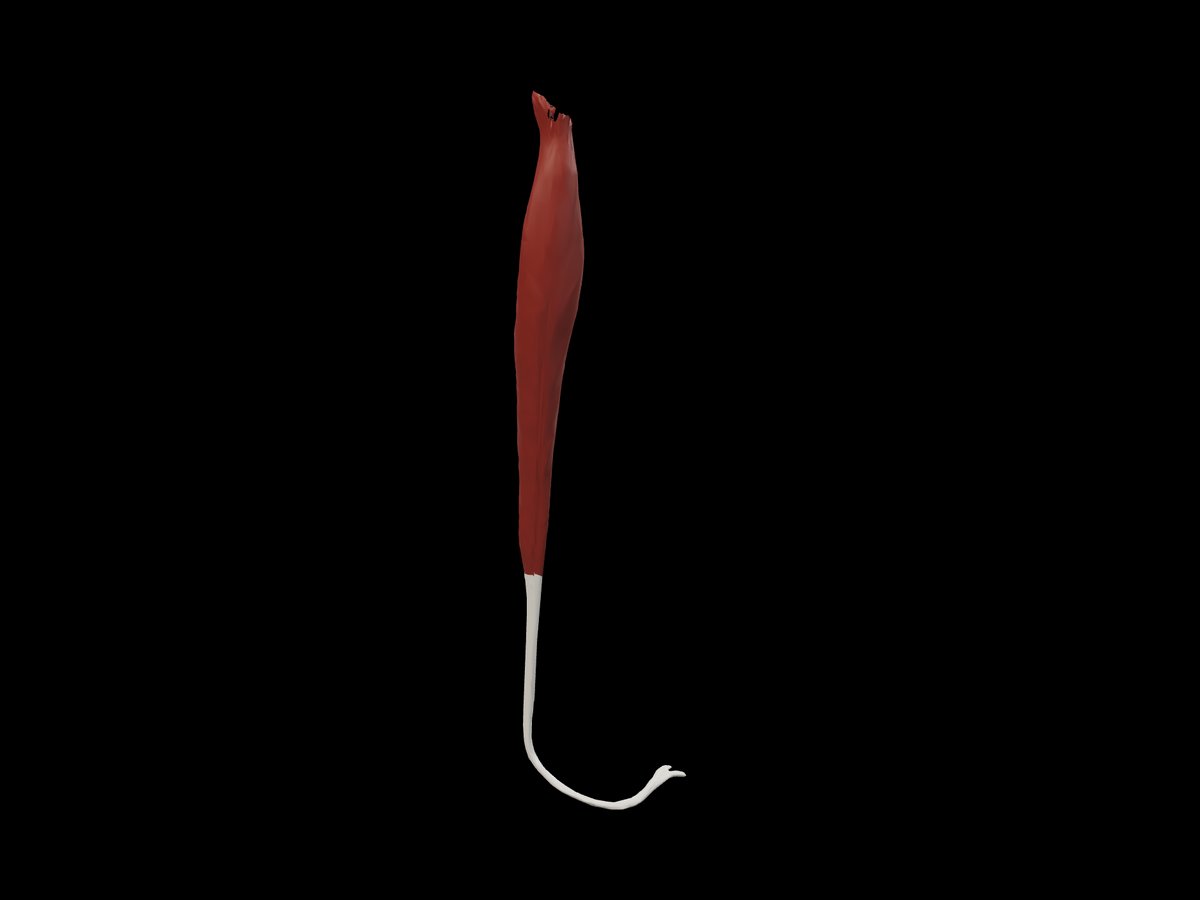
Fibularis (peroneus) longus runs down the outer leg, behind the lateral malleolus and right across the sole to the base of the first metatarsal. It turns the sole outwards and supports the arches of the foot.
Other names: Musculus fibularis longus (Latin) · Muscle long fibulaire (French) · Músculo fibular largo (Spanish) · Músculo fibular longo (Portuguese)
Key facts
- Origin
- Head and upper two-thirds of the lateral surface of the fibula
- Insertion
- Plantar base of the 1st metatarsal and medial cuneiform
- Action
- Everts the foot; plantar flexes the ankle; supports the transverse arch
- Nerve supply
- Superficial fibular nerve (L5–S1)
- Arterial supply
- Anterior tibial and fibular arteries
- Function
- Everts and plantarflexes the foot; supports the lateral and transverse arches; presses the first metatarsal head down.
Location and relations
Lateral compartment of the leg; its tendon grooves the cuboid and crosses the sole obliquely.
Surface anatomy
The tendon is felt behind the lateral malleolus when the foot is turned out.
Clinical notes
- Tendon tears and subluxation of the fibular tendons behind the malleolus follow ankle sprains
- An os peroneum (sesamoid in the tendon) can fracture
Quick answers
What are the origin and insertion of the fibularis longus muscle?
Origin: Head and upper two-thirds of the lateral surface of the fibula. Insertion: Plantar base of the 1st metatarsal and medial cuneiform.
What does the fibularis longus muscle do?
Everts the foot; plantar flexes the ankle; supports the transverse arch
What is the nerve supply of the fibularis longus muscle?
Superficial fibular nerve (L5–S1)
What is the blood supply of the fibularis longus muscle?
Anterior tibial and fibular arteries
Where is the fibularis longus muscle located?
Lateral compartment of the leg; its tendon grooves the cuboid and crosses the sole obliquely.
Notes written for anatmy3d and checked against Gray’s Anatomy, Moore’s Clinically Oriented Anatomy and Netter. Last reviewed .