Stapes
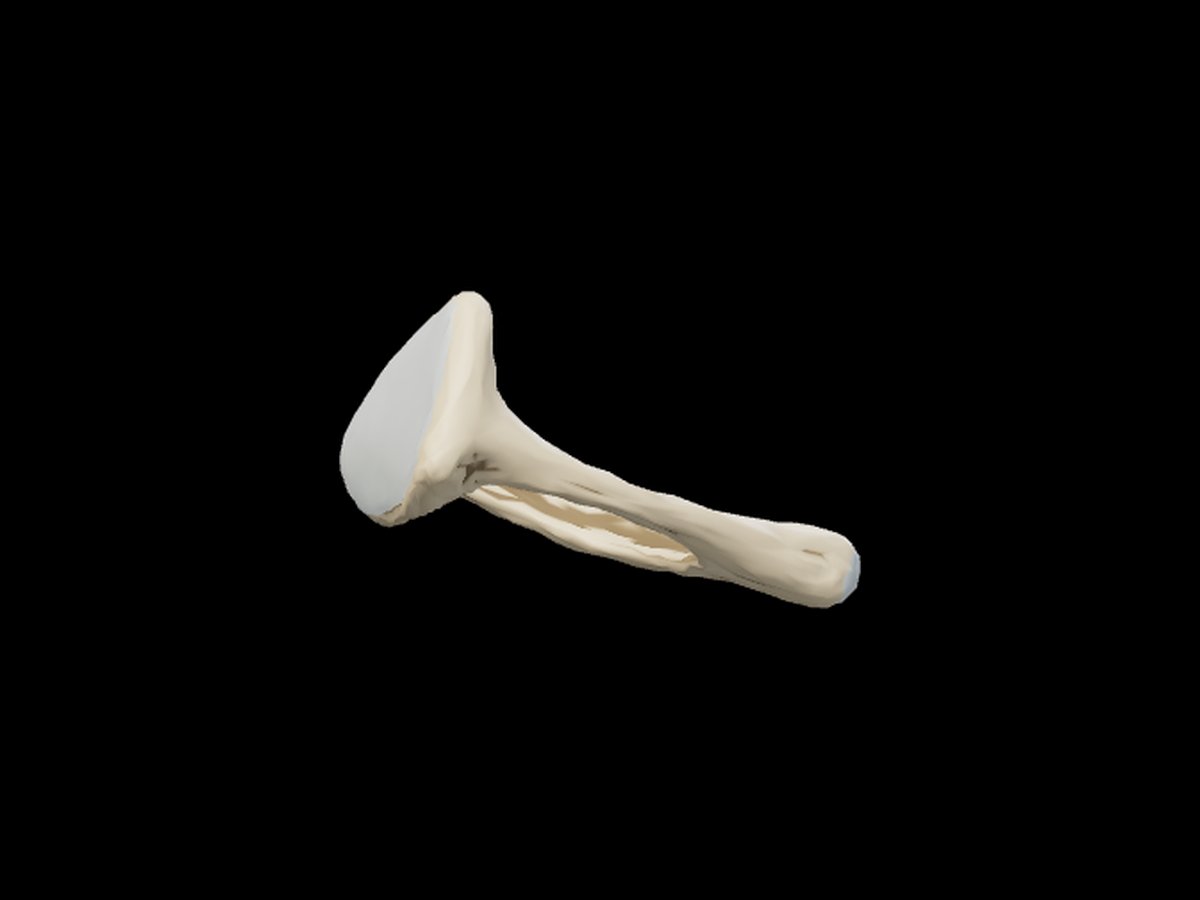
The stapes (stirrup) is the smallest bone in the body. Its footplate fits into the oval window of the inner ear and pushes the vibrations into the fluid of the cochlea.
Other names: Etrier (French) · Estapedio (Spanish) · Estribo (Portuguese)
Key facts
- Type
- Ossicle (small bone of the middle ear)
- Nerve supply
- Stapedius is supplied by the facial nerve
- Arterial supply
- Branches of the anterior tympanic and stylomastoid arteries
- Articulations
- Incus (incudostapedial joint); oval window (syndesmosis via the annular ligament)
- Ossification
- In cartilage (second pharyngeal arch); adult size at birth
- Function
- Transmits vibrations to the perilymph; the stapedius muscle, the smallest skeletal muscle, attaches to its neck and dampens loud sounds
Location and relations
In the middle ear, between the long process of the incus and the oval window of the inner ear.
Parts and features
- Head, joining the incus
- Anterior and posterior limbs (crura)
- Footplate, sealed into the oval window by the annular ligament
Landmarks on the stapes
- Anterior limb of stapes
- Articular facet of head of stapes
- Base of stapes
- Posterior limb of stapes
Clinical notes
- Otosclerosis fixes the footplate in the oval window, causing conductive deafness; stapedectomy replaces it with a prosthesis
- Facial nerve palsy can paralyse stapedius, making normal sounds painfully loud (hyperacusis)
Quick answers
Where are the stapes located?
In the middle ear, between the long process of the incus and the oval window of the inner ear.
What do the stapes articulate with?
Incus (incudostapedial joint); oval window (syndesmosis via the annular ligament)
When do the stapes ossify?
In cartilage (second pharyngeal arch); adult size at birth
What is the blood supply of the stapes?
Branches of the anterior tympanic and stylomastoid arteries
What do the stapes do?
Transmits vibrations to the perilymph; the stapedius muscle, the smallest skeletal muscle, attaches to its neck and dampens loud sounds
Notes written for anatmy3d and checked against Gray’s Anatomy, Moore’s Clinically Oriented Anatomy and Netter. Last reviewed .