Fibularis brevis muscle
Musculus fibularis brevis
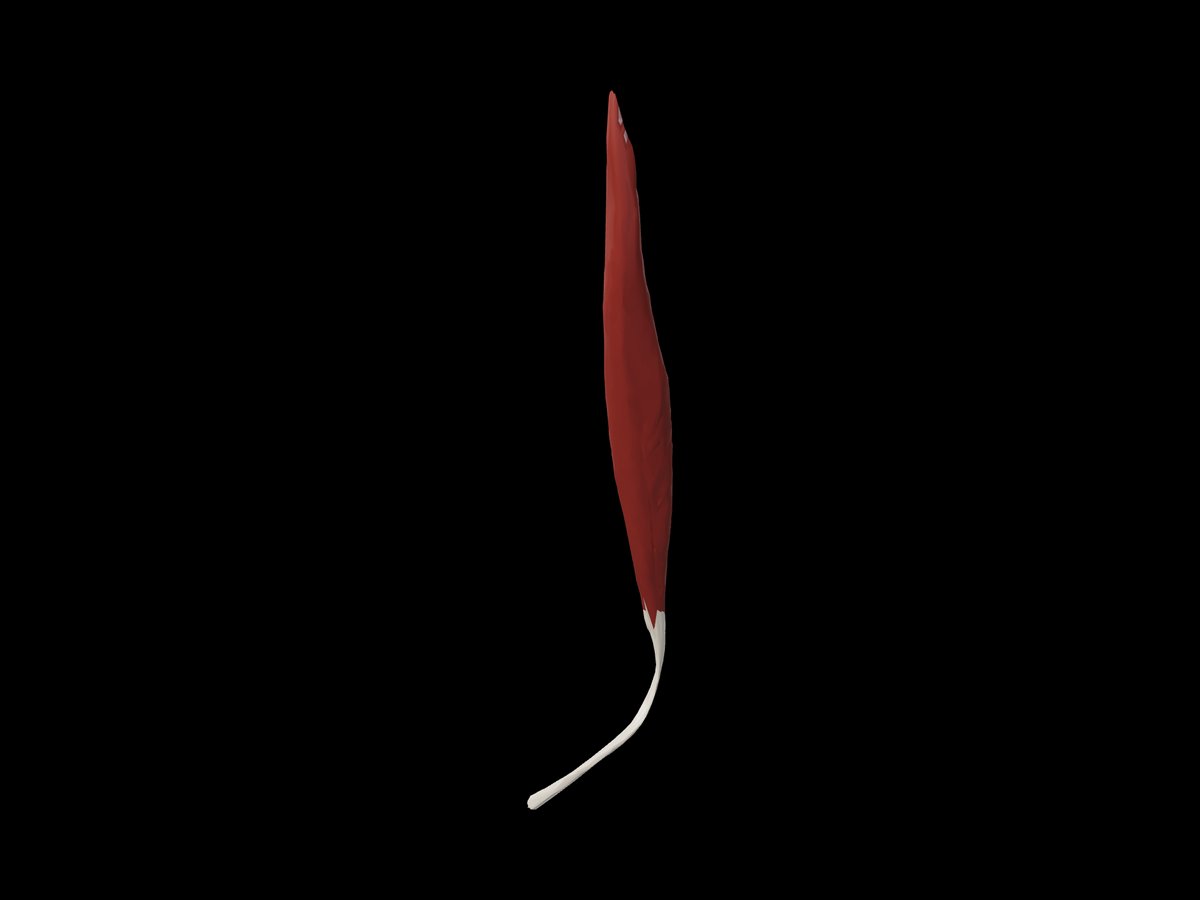
Fibularis (peroneus) brevis lies under fibularis longus and inserts on the tuberosity of the fifth metatarsal. It is the main evertor of the foot and protects against ankle sprains.
Other names: Musculus fibularis brevis (Latin) · Muscle court fibulaire (French) · Músculo fibular corto (Spanish) · Músculo fibularis brevis (Portuguese)
The same notes are on the main page: Fibularis brevis muscle (Muscles).
Key facts
- Origin
- Lower two-thirds of the lateral surface of the fibula
- Insertion
- Tuberosity at the base of the 5th metatarsal
- Action
- Everts the foot; weakly plantar flexes the ankle
- Nerve supply
- Superficial fibular nerve (L5–S1)
- Arterial supply
- Branches of the fibular artery
- Function
- Everts and plantarflexes the foot; resists sudden inversion.
Location and relations
Lateral compartment; its tendon runs directly behind the lateral malleolus, in front of the longus tendon.
Surface anatomy
Its tendon can be traced to the bump of the fifth metatarsal base.
Clinical notes
- An inversion injury can pull its tendon off the fifth metatarsal base (avulsion fracture)
- Split tears of the tendon cause chronic lateral ankle pain
Quick answers
What are the origin and insertion of the fibularis brevis muscle?
Origin: Lower two-thirds of the lateral surface of the fibula. Insertion: Tuberosity at the base of the 5th metatarsal.
What does the fibularis brevis muscle do?
Everts the foot; weakly plantar flexes the ankle
What is the nerve supply of the fibularis brevis muscle?
Superficial fibular nerve (L5–S1)
What is the blood supply of the fibularis brevis muscle?
Branches of the fibular artery
Where is the fibularis brevis muscle located?
Lateral compartment; its tendon runs directly behind the lateral malleolus, in front of the longus tendon.
Notes written for anatmy3d and checked against Gray’s Anatomy, Moore’s Clinically Oriented Anatomy and Netter. Last reviewed .