HeartHeart
Left atrium
Atrium sinistrum
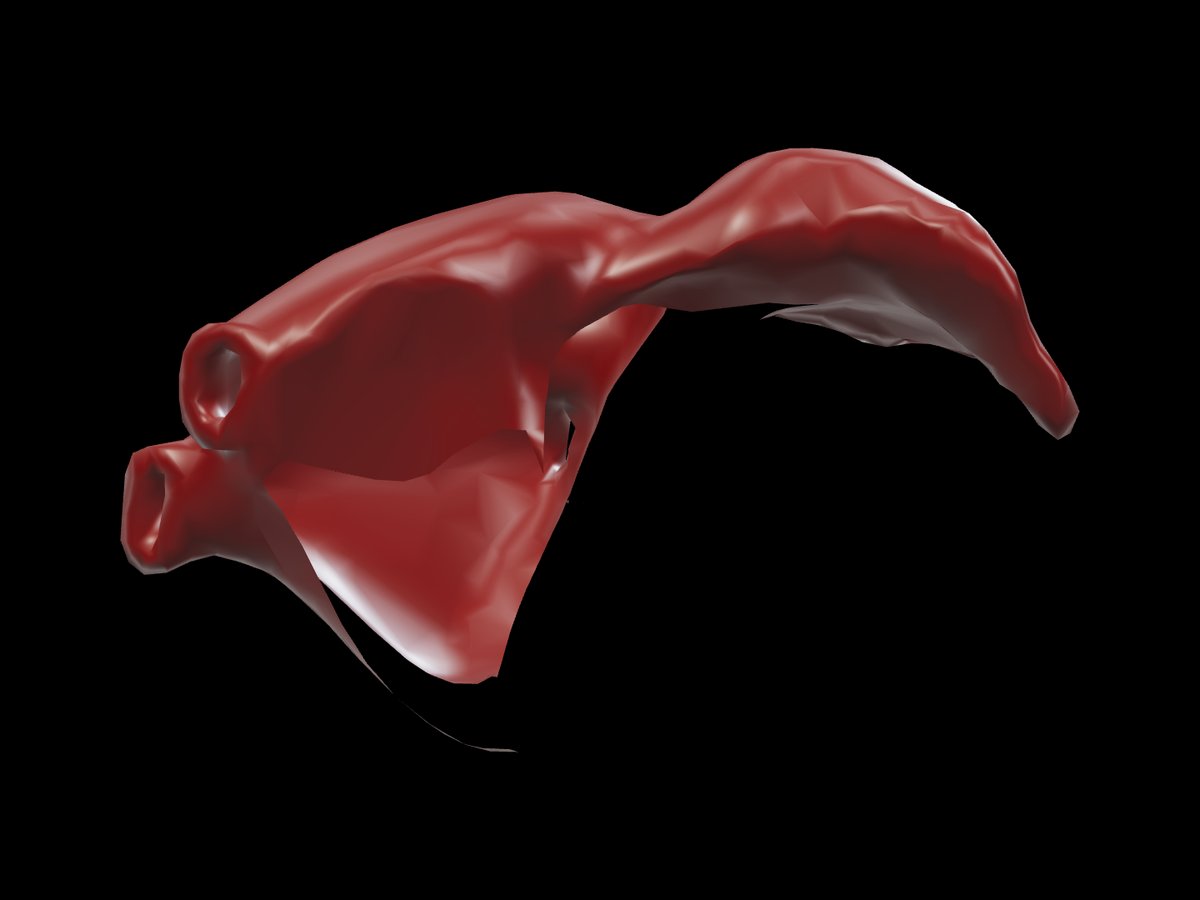
The left atrium receives oxygen-rich blood from the lungs through four pulmonary veins and passes it through the mitral valve to the left ventricle. It is the most posterior chamber of the heart.
Other names: Atrium sinistrum (Latin) · Atrium gauche (French, Portuguese) · Atrio izquierdo (Spanish)
Key facts
- Type
- Heart chamber (atrium)
- Nerve supply
- Cardiac plexus
- Arterial supply
- Circumflex artery
- Function
- Collects blood from the lungs, acts as a reservoir during ventricular contraction and gives a final "kick" of blood to the ventricle.
Location and relations
Back (base) of the heart, directly in front of the oesophagus and descending aorta; its left auricle wraps forwards beside the pulmonary trunk.
Parts and features
- Smooth-walled main part receiving the four pulmonary veins
- Left auricle (atrial appendage), lined with pectinate muscles
- Septal wall with the valve of the foramen ovale
- Mitral (left atrioventricular) valve at its outlet
Clinical notes
- In atrial fibrillation, blood clots usually form in the left auricle and can travel to the brain, causing stroke; devices can close the auricle
- Catheter ablation for atrial fibrillation isolates the pulmonary veins where they enter this chamber
- An enlarged left atrium (for example from mitral stenosis) can press on the oesophagus or, rarely, the left recurrent laryngeal nerve
- Ultrasound through the oesophagus (transoesophageal echo) shows it best because they lie side by side
Quick answers
Where is the left atrium located?
Back (base) of the heart, directly in front of the oesophagus and descending aorta; its left auricle wraps forwards beside the pulmonary trunk.
What does the left atrium do?
Collects blood from the lungs, acts as a reservoir during ventricular contraction and gives a final "kick" of blood to the ventricle.
What is the nerve supply of the left atrium?
Cardiac plexus
What is the blood supply of the left atrium?
Circumflex artery
Notes written for anatmy3d and checked against Gray’s Anatomy, Moore’s Clinically Oriented Anatomy and Netter. Last reviewed .