Lower canine
Dens caninus inferioris
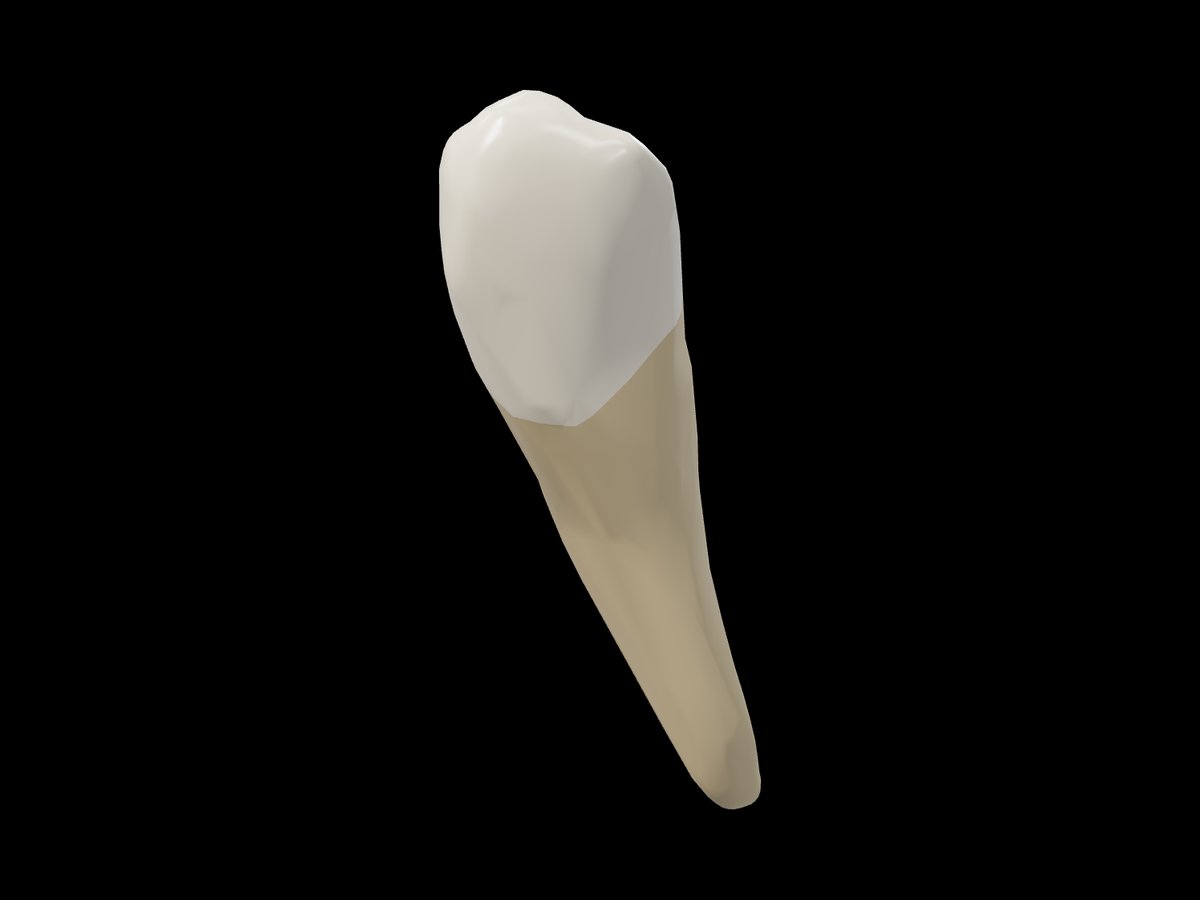
The lower canines are long, single-rooted pointed teeth at the corners of the lower dental arch. They are slightly smaller than the upper canines.
Other names: Dens caninus inferioris (Latin) · Dent canine inférieure (French) · Diente canino inferior (Spanish) · Canino inferior (Portuguese)
Key facts
- Type
- Permanent tooth (canine), single root
- Nerve supply
- Incisive branch of the inferior alveolar nerve
- Arterial supply
- Incisive branch of the inferior alveolar artery
- Function
- Tearing and holding food; guides sideways jaw movements with the upper canine
Location and relations
In the mandible between the lateral incisor and the first premolar (FDI 33 and 43).
Parts and features
- Crown with one pointed cusp
- Long single root, occasionally split into two
Development
Deciduous canine at about 16–23 months; permanent canine at about 9–10 years
Clinical notes
- Lower canines are often among the last teeth retained in old age
- A mandibular fracture line commonly runs through the long canine socket
Quick answers
Where is the lower canine located?
In the mandible between the lateral incisor and the first premolar (FDI 33 and 43).
What is the blood supply of the lower canine?
Incisive branch of the inferior alveolar artery
What does the lower canine do?
Tearing and holding food; guides sideways jaw movements with the upper canine
Notes written for anatmy3d and checked against Gray’s Anatomy, Moore’s Clinically Oriented Anatomy and Netter. Last reviewed .