Upper canine
Dens caninus superioris
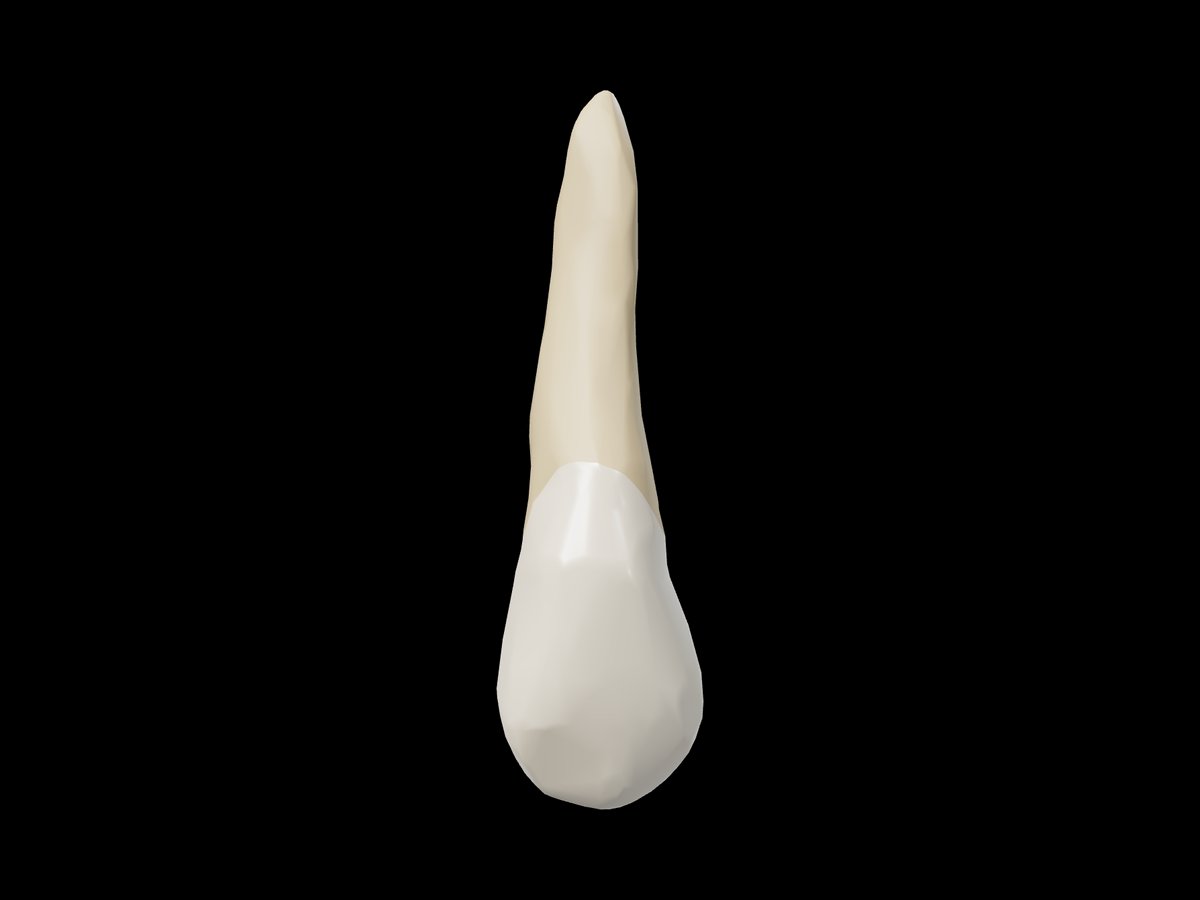
The upper canines (eye teeth) are the longest teeth in the mouth, with a single pointed cusp and the longest root. They guide the jaw in side-to-side movements and anchor the corners of the dental arch.
Other names: Dens caninus superioris (Latin) · Dent canine supérieure (French) · Diente canino superior (Spanish) · Canino superior (Portuguese)
Key facts
- Type
- Permanent tooth (canine), single root
- Nerve supply
- Anterior superior alveolar nerve
- Arterial supply
- Anterior superior alveolar artery
- Function
- Tearing and holding food; "canine guidance" protects the back teeth during sideways jaw movements
Location and relations
At the corner of the upper dental arch, between the lateral incisor and the first premolar (FDI 13 and 23). The root raises a ridge (canine eminence) on the maxilla.
Parts and features
- Crown with one pointed cusp and sloping cutting ridges
- Very long single root
Development
Deciduous canine erupts at about 16–22 months; the permanent canine at about 11–12 years
Clinical notes
- The commonest permanent tooth (after wisdom teeth) to be impacted, often lying in the palate; it may need surgical exposure and orthodontic traction
- Infection from the long root can spread into the face near the eye
Quick answers
Where is the upper canine located?
At the corner of the upper dental arch, between the lateral incisor and the first premolar (FDI 13 and 23). The root raises a ridge (canine eminence) on the maxilla.
What is the blood supply of the upper canine?
Anterior superior alveolar artery
What does the upper canine do?
Tearing and holding food; "canine guidance" protects the back teeth during sideways jaw movements
Notes written for anatmy3d and checked against Gray’s Anatomy, Moore’s Clinically Oriented Anatomy and Netter. Last reviewed .