ArteriesSystemic arteries
Occipital artery
Arteria occipitalis
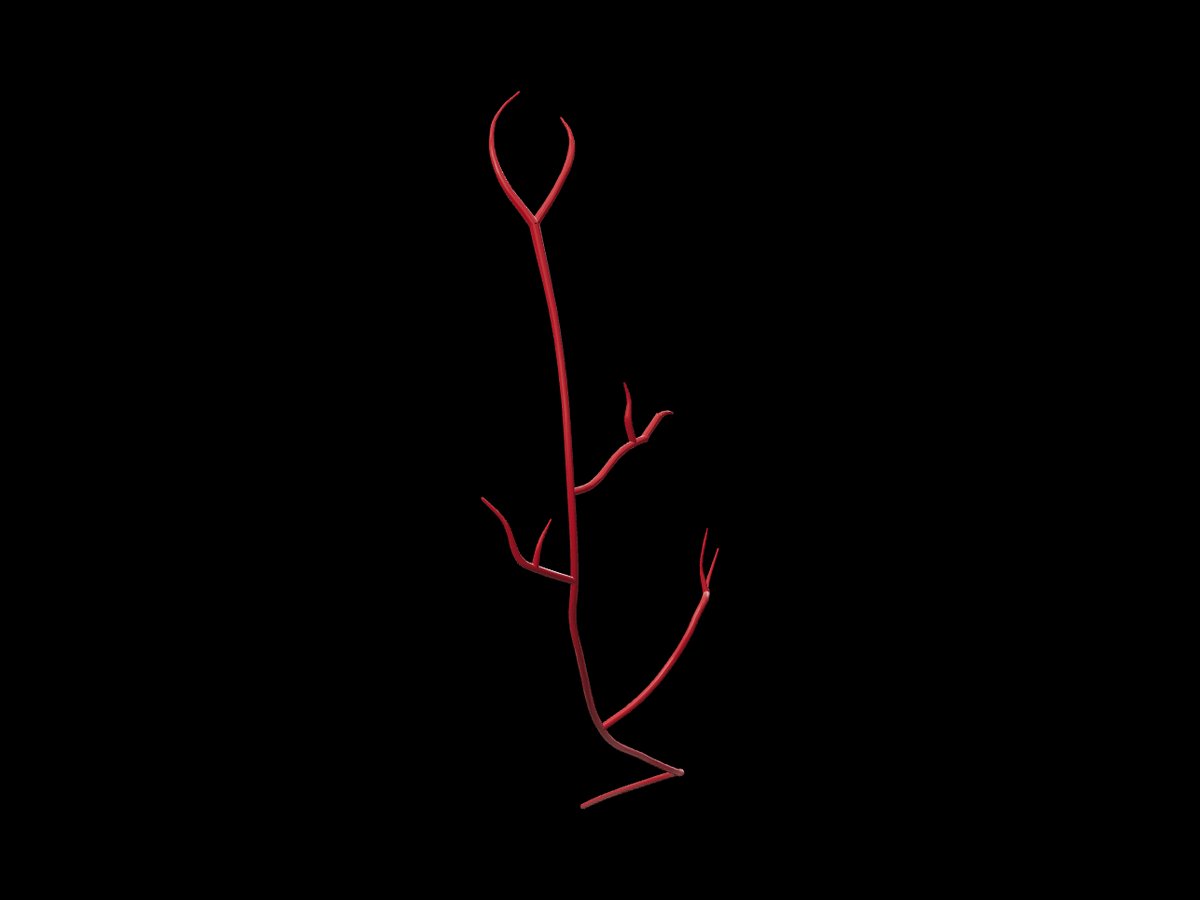
The occipital artery supplies the back of the scalp and upper neck muscles, running alongside the greater occipital nerve.
Other names: Arteria occipitalis (Latin) · Artère occipitale (French) · Arteria occipital (Spanish) · Artéria occipital (Portuguese)
Key facts
- Type
- Muscular artery
- Supplies
- Back of the scalp, sternocleidomastoid and the upper muscles of the back of the neck
- Branches
- Sternocleidomastoid branches, mastoid branch, descending branch, occipital (scalp) branches
- Course
- Arises from the back of the external carotid opposite the facial artery, runs back deep to the posterior belly of digastric, grooves the mastoid process and pierces the trapezius attachment to reach the back of the scalp.
- Function
- Carries oxygen-rich blood up the back of the neck to the posterior scalp and upper neck muscles; through its descending branch it can carry collateral flow when the vertebral artery is blocked.
Clinical notes
- Its descending branch joins the vertebral and deep cervical arteries, forming a backup route around blocked arteries
- Compression of the greater occipital nerve near the artery causes occipital neuralgia
Quick answers
What is the course of the occipital artery?
Arises from the back of the external carotid opposite the facial artery, runs back deep to the posterior belly of digastric, grooves the mastoid process and pierces the trapezius attachment to reach the back of the scalp.
What are the branches of the occipital artery?
Sternocleidomastoid branches, mastoid branch, descending branch, occipital (scalp) branches
What does the occipital artery supply?
Back of the scalp, sternocleidomastoid and the upper muscles of the back of the neck
Notes written for anatmy3d and checked against Gray’s Anatomy, Moore’s Clinically Oriented Anatomy and Netter. Last reviewed .