ArteriesSystemic arteries
Posterior inferior cerebellar artery
Arteria cerebelli inferior posterior
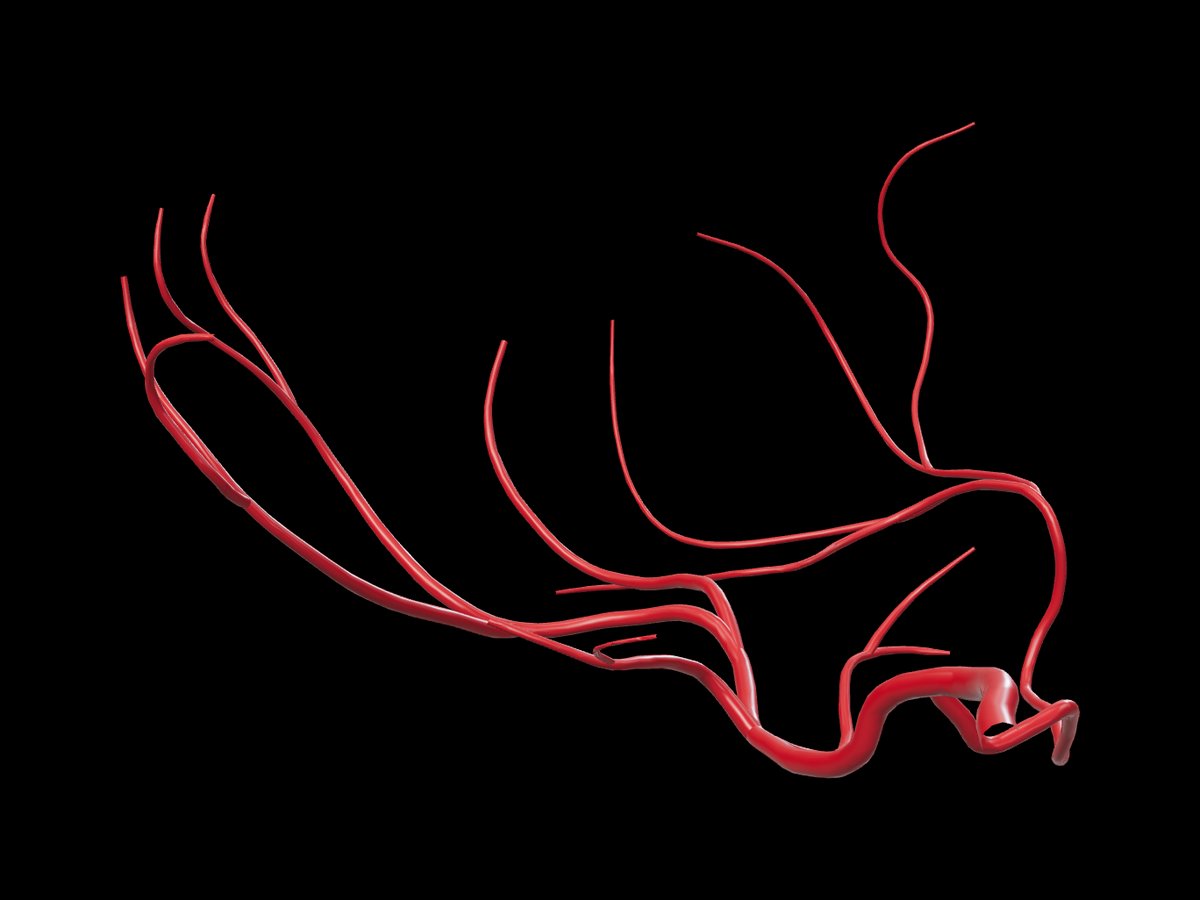
The posterior inferior cerebellar artery (PICA) is the largest branch of the vertebral artery. It supplies the side of the medulla and the underside of the cerebellum.
Other names: Arteria cerebelli inferior posterior (Latin) · Artère cérébelleuse inféropostérieure (French) · Arteria cerebelosa inferior posterior (Spanish) · Artéria cerebelar inferior posterior (Portuguese)
Key facts
- Type
- Cerebral artery
- Supplies
- Lateral medulla, underside of the cerebellar hemisphere and vermis, choroid plexus of the fourth ventricle
- Course
- Arises from the vertebral artery and winds back around the medulla between the rootlets of the lower cranial nerves before reaching the underside of the cerebellum.
- Function
- Carries oxygen-rich blood from the vertebral artery around the medulla to its lateral part, the underside of the cerebellum and the choroid plexus of the fourth ventricle.
Clinical notes
- Blockage (or vertebral artery blockage) causes lateral medullary (Wallenberg) syndrome: vertigo, difficulty swallowing, hoarseness, unsteadiness, loss of pain sensation in the face on the same side and in the body on the opposite side
- Swelling after a large cerebellar stroke can compress the brainstem and block the flow of cerebrospinal fluid
Quick answers
What is the course of the posterior inferior cerebellar artery?
Arises from the vertebral artery and winds back around the medulla between the rootlets of the lower cranial nerves before reaching the underside of the cerebellum.
What does the posterior inferior cerebellar artery supply?
Lateral medulla, underside of the cerebellar hemisphere and vermis, choroid plexus of the fourth ventricle
Notes written for anatmy3d and checked against Gray’s Anatomy, Moore’s Clinically Oriented Anatomy and Netter. Last reviewed .