Upper first molar tooth
Dens molaris primus superioris
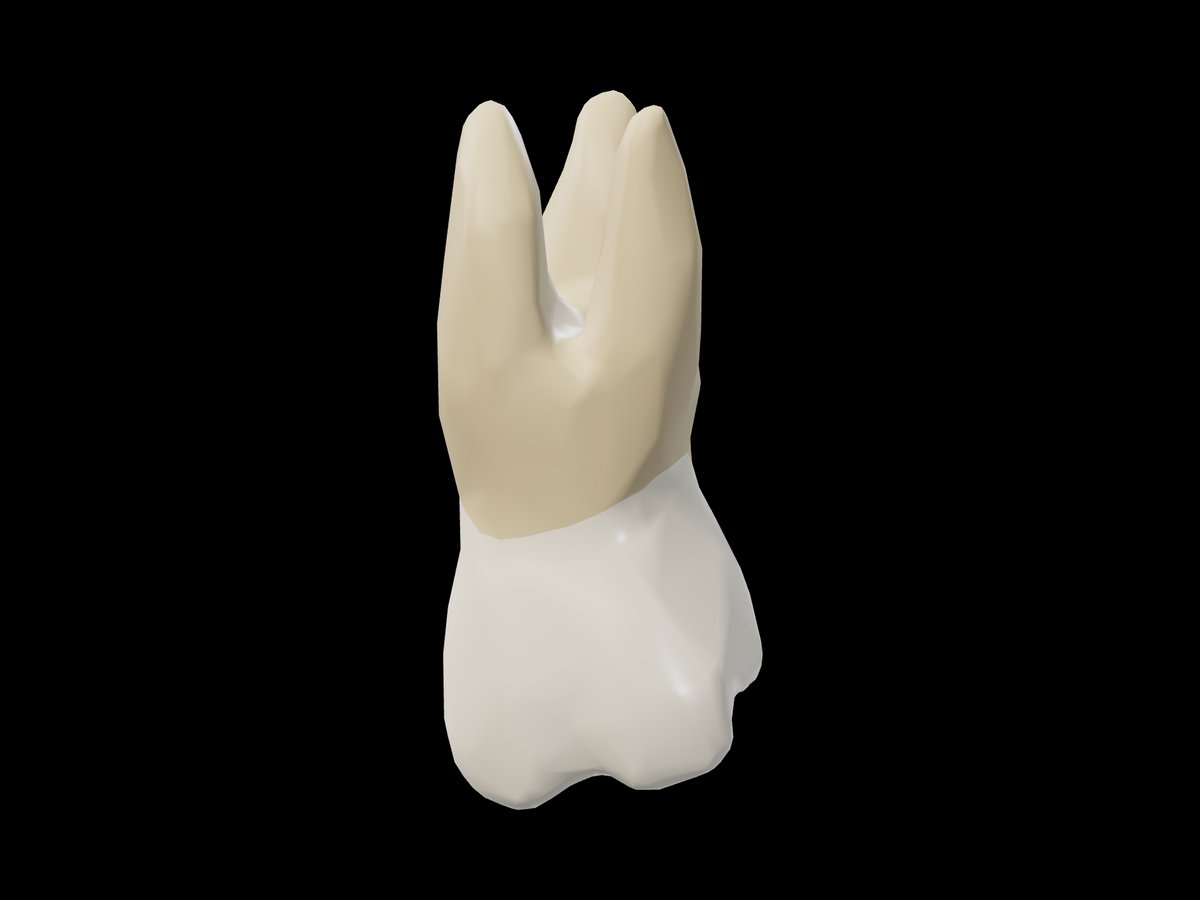
The upper first molars are the largest teeth in the upper jaw, with four cusps and three roots. They are the key teeth of the bite and among the first permanent teeth to erupt.
Other names: Dens molaris primus superioris (Latin) · Première molaire supérieure (French) · Diente primer molar superior (Spanish) · Primeiro molar superior (Portuguese)
Key facts
- Type
- Permanent tooth (molar), three roots
- Nerve supply
- Posterior superior alveolar nerve (the mesiobuccal root sometimes by the middle superior alveolar nerve)
- Arterial supply
- Posterior superior alveolar artery
- Function
- Main grinding tooth; its position defines the bite (occlusion) in orthodontics
Location and relations
In the maxilla behind the second premolar (FDI 16 and 26), directly below the maxillary sinus.
Parts and features
- Rhomboid crown with four cusps (mesiobuccal, distobuccal, mesiopalatal, distopalatal), often with an extra cusp of Carabelli
- Three roots: two buccal and one large palatal root
Development
Erupts at about 6 years, behind the baby teeth, without replacing any of them ("six-year molar")
Clinical notes
- Roots often project into the maxillary sinus; extraction can create a connection between mouth and sinus (oro-antral fistula)
- Often mistaken for a baby tooth by parents, so decay can go untreated in children
Quick answers
Where is the upper first molar tooth located?
In the maxilla behind the second premolar (FDI 16 and 26), directly below the maxillary sinus.
What is the blood supply of the upper first molar tooth?
Posterior superior alveolar artery
What does the upper first molar tooth do?
Main grinding tooth; its position defines the bite (occlusion) in orthodontics
Notes written for anatmy3d and checked against Gray’s Anatomy, Moore’s Clinically Oriented Anatomy and Netter. Last reviewed .