Xiphoid process
Processus xiphoideus
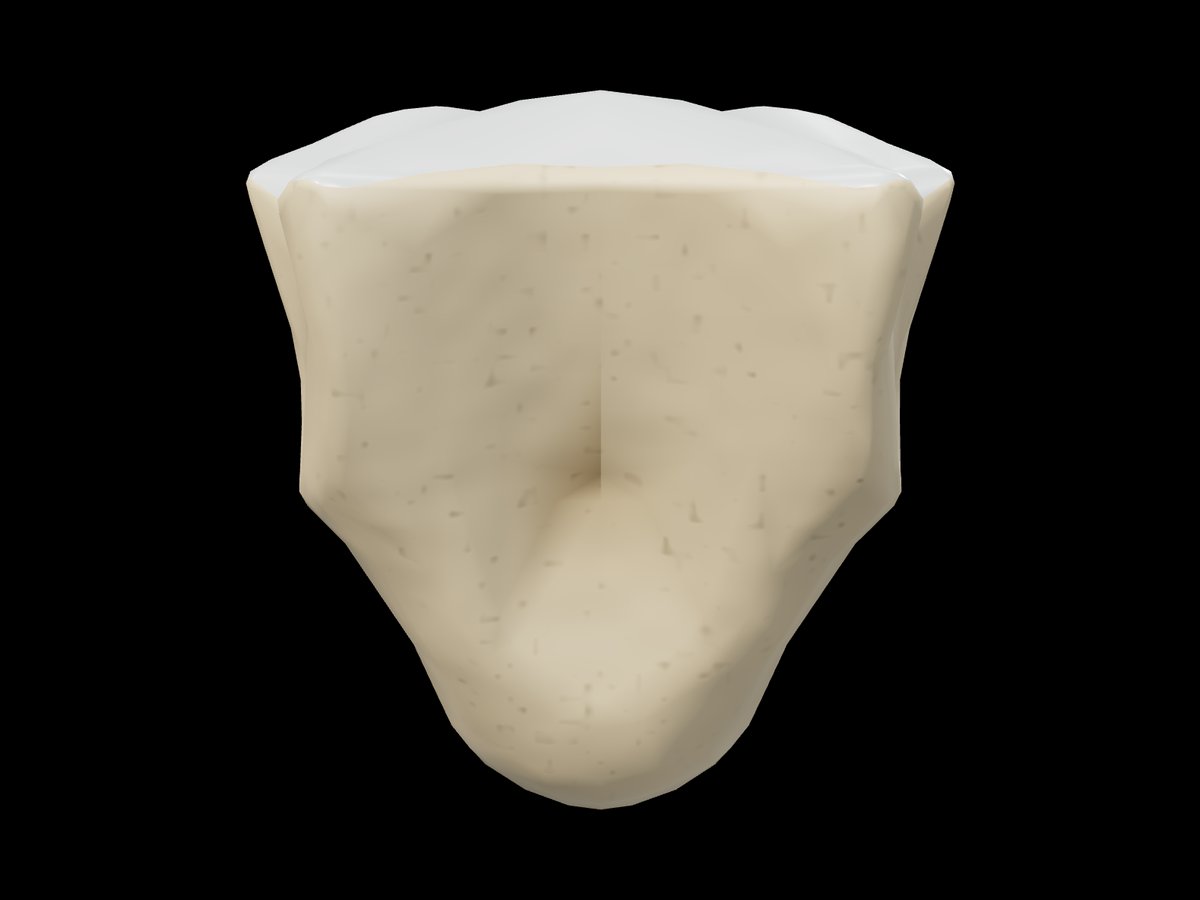
The xiphoid process is the small, pointed lower end of the sternum. It is cartilaginous in young people and gradually ossifies, often fusing with the body of the sternum in later life.
Other names: Processus xiphoideus (Latin) · Processus xiphoïde (French) · Proceso xifoides (Spanish) · Processo xifóide (Portuguese)
Key facts
- Type
- Flat bone (partly cartilage)
- Arterial supply
- Internal thoracic arteries (musculophrenic and superior epigastric branches nearby)
- Articulations
- Body of the sternum (xiphisternal joint); seventh costal cartilages
- Ligaments
- Costoxiphoid ligaments
- Ossification
- Ossifies from one centre around 3 years, or much later; fusion with the body of the sternum often occurs after 40
- Function
- An anchor where the abdominal wall meets the chest: the linea alba and rectus abdominis attach to its front and the sternal part of the diaphragm to its back
Location and relations
In the epigastrium at the T9–T10 level, at the apex of the angle between the two costal margins.
Parts and features
- Highly variable shape: pointed, broad, forked or perforated
- Attachments for the linea alba, the rectus abdominis and the diaphragm (sternal part)
Surface anatomy
Felt as a small firm point at the lower end of the sternum, where the costal margins meet.
Muscles attached to the xiphoid process
Origins
Clinical notes
- A prominent or bent xiphoid is sometimes mistaken for a lump in the upper abdomen
- Chest compressions placed too low can fracture the xiphoid and injure the liver
- The xiphisternal junction is used as a landmark for the lower border of the heart and the central tendon of the diaphragm
Quick answers
Where is the xiphoid process located?
In the epigastrium at the T9–T10 level, at the apex of the angle between the two costal margins.
What does the xiphoid process articulate with?
Body of the sternum (xiphisternal joint); seventh costal cartilages
When does the xiphoid process ossify?
Ossifies from one centre around 3 years, or much later; fusion with the body of the sternum often occurs after 40
What is the blood supply of the xiphoid process?
Internal thoracic arteries (musculophrenic and superior epigastric branches nearby)
What does the xiphoid process do?
An anchor where the abdominal wall meets the chest: the linea alba and rectus abdominis attach to its front and the sternal part of the diaphragm to its back
Notes written for anatmy3d and checked against Gray’s Anatomy, Moore’s Clinically Oriented Anatomy and Netter. Last reviewed .