ArteriesSystemic arteries
Callosomarginal artery
Arteria callosomarginalis
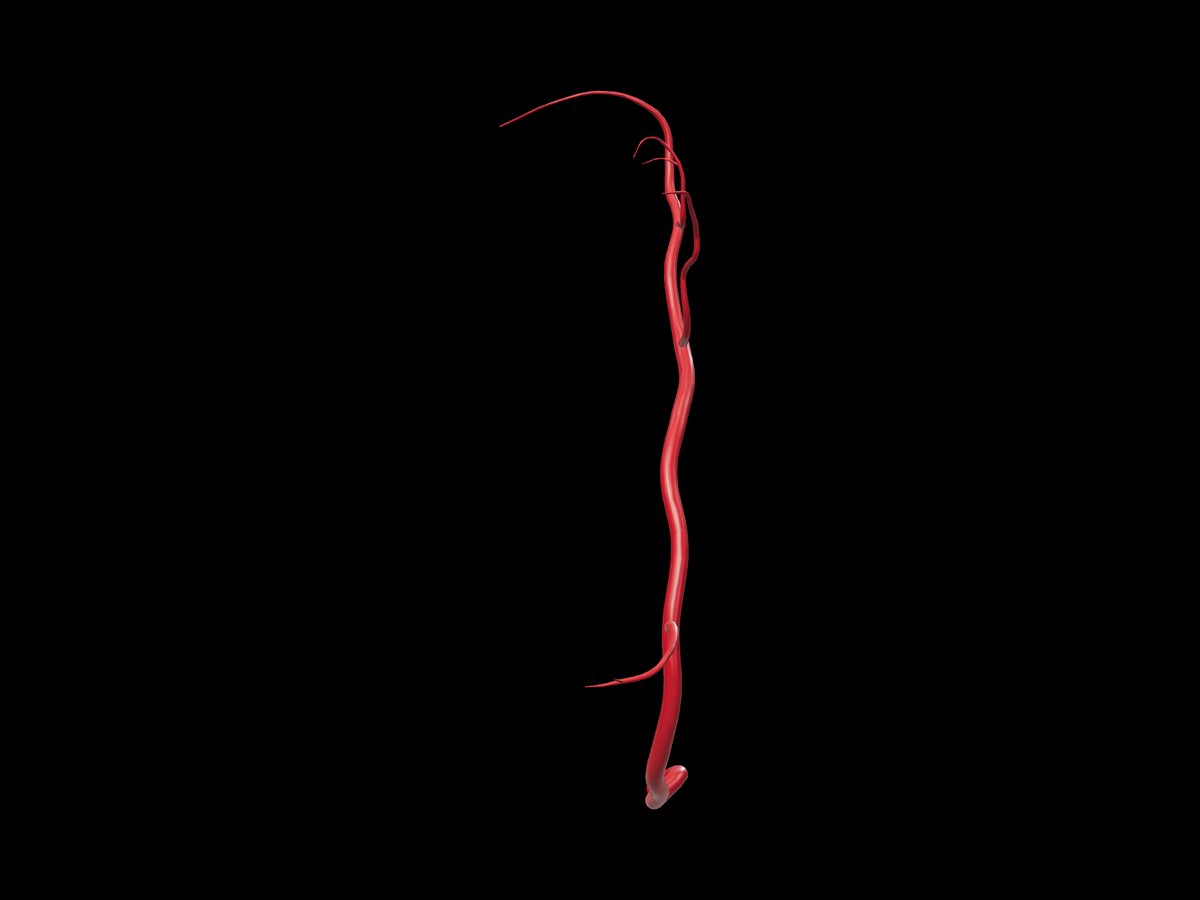
The callosomarginal artery is a large branch of the anterior cerebral artery that runs in the cingulate sulcus, parallel to the pericallosal artery.
Other names: Arteria callosomarginalis (Latin) · Artère callosomarginale (French) · Arteria callosomarginal (Spanish) · Artéria calosomarginal (Portuguese)
Key facts
- Type
- Cortical cerebral artery
- Supplies
- Medial frontal lobe, cingulate gyrus and the paracentral lobule (leg motor and sensory areas)
- Branches
- Frontal branches (anteromedial, intermediomedial, posteromedial), paracentral and cingulate branches
- Course
- Arises from the anterior cerebral artery near the front of the corpus callosum and runs back in the cingulate sulcus, giving branches up onto the medial surface of the hemisphere. It is absent in some people.
- Function
- Carries oxygen-rich blood back along the cingulate sulcus, sending branches up over the medial frontal lobe to the cingulate gyrus and the paracentral lobule, the leg's motor and sensory area.
Clinical notes
- Blockage affects leg movement and sensation on the opposite side
Quick answers
What is the course of the callosomarginal artery?
Arises from the anterior cerebral artery near the front of the corpus callosum and runs back in the cingulate sulcus, giving branches up onto the medial surface of the hemisphere. It is absent in some people.
What are the branches of the callosomarginal artery?
Frontal branches (anteromedial, intermediomedial, posteromedial), paracentral and cingulate branches
What does the callosomarginal artery supply?
Medial frontal lobe, cingulate gyrus and the paracentral lobule (leg motor and sensory areas)
Notes written for anatmy3d and checked against Gray’s Anatomy, Moore’s Clinically Oriented Anatomy and Netter. Last reviewed .