Common fibular nerve
Nervus fibularis communis
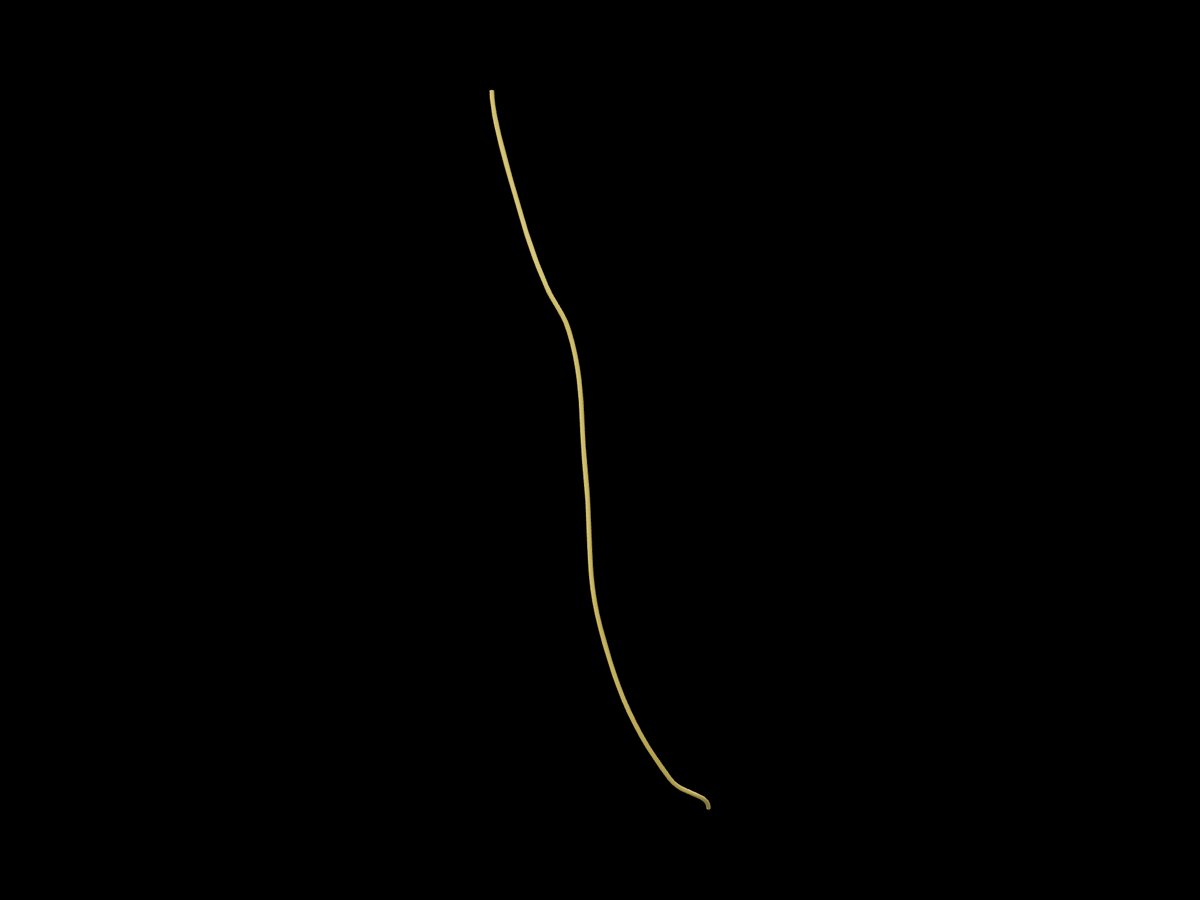
The common fibular (peroneal) nerve is the smaller branch of the sciatic nerve. It winds around the neck of the fibula, just under the skin, before dividing into the superficial and deep fibular nerves.
Other names: Nervus fibularis communis (Latin) · Nerf fibulaire commun (French) · Nervio fibular común (Spanish) · Nervo fibular comum (Portuguese)
Key facts
- Type
- Branch of the sciatic nerve (L4–S2)
- Branches
- Lateral sural cutaneous nerve, sural communicating branch, branches to the knee joint, superficial and deep fibular nerves
- Course
- Follows the inner border of biceps femoris out of the popliteal fossa, winds around the neck of the fibula and divides inside fibularis longus.
- Function
- Lifting the foot and toes (dorsiflexion) and turning the foot out (eversion); sensation of the outer leg and top of the foot.
Clinical notes
- It is the most commonly injured nerve of the leg, by fractures of the fibular neck, tight plaster casts, prolonged leg crossing or squatting, causing foot drop
- People with foot drop lift the knee high to avoid catching the toes (high-stepping gait)
Quick answers
What is the course of the common fibular nerve?
Follows the inner border of biceps femoris out of the popliteal fossa, winds around the neck of the fibula and divides inside fibularis longus.
What does the common fibular nerve do?
Lifting the foot and toes (dorsiflexion) and turning the foot out (eversion); sensation of the outer leg and top of the foot.
What are the branches of the common fibular nerve?
Lateral sural cutaneous nerve, sural communicating branch, branches to the knee joint, superficial and deep fibular nerves
Notes written for anatmy3d and checked against Gray’s Anatomy, Moore’s Clinically Oriented Anatomy and Netter. Last reviewed .