Lumbar arteries
Arteriae lumbales
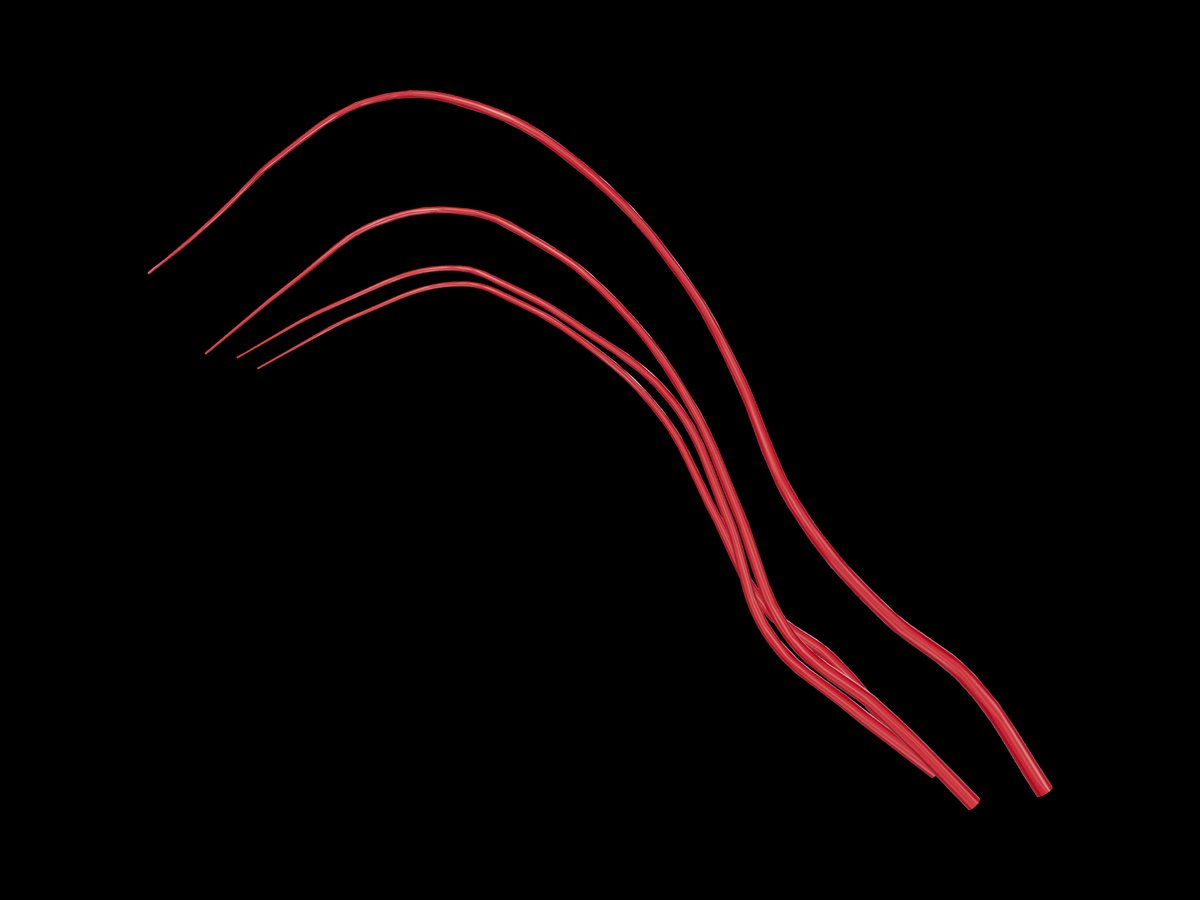
The lumbar arteries are four pairs of segmental arteries from the back of the abdominal aorta that supply the back wall of the abdomen, the lumbar spine and its contents.
Other names: Arteriae lumbales (Latin) · Artères lombaires (French) · Arterias lumbares (Spanish) · Artérias lombares (Portuguese)
Key facts
- Type
- Segmental arteries
- Supplies
- Posterior abdominal wall, back muscles, lumbar vertebrae, spinal cord and cauda equina
- Branches
- Dorsal branches (with spinal branches to the spinal canal), muscular and cutaneous branches
- Course
- Arise from the back of the aorta opposite L1–L4 and run around the vertebral bodies, behind the sympathetic trunks and psoas, into the abdominal wall.
- Function
- Carry oxygen-rich blood from the back of the aorta around the lumbar vertebrae to the posterior abdominal wall and back muscles, and through spinal branches into the vertebral canal.
Clinical notes
- After stent repair of an aortic aneurysm they can keep filling the aneurysm sac (type II endoleak)
- Bleeding from them complicates spinal and retroperitoneal surgery
Quick answers
What is the course of the lumbar arteries?
Arise from the back of the aorta opposite L1–L4 and run around the vertebral bodies, behind the sympathetic trunks and psoas, into the abdominal wall.
What are the branches of the lumbar arteries?
Dorsal branches (with spinal branches to the spinal canal), muscular and cutaneous branches
What do the lumbar arteries supply?
Posterior abdominal wall, back muscles, lumbar vertebrae, spinal cord and cauda equina
Notes written for anatmy3d and checked against Gray’s Anatomy, Moore’s Clinically Oriented Anatomy and Netter. Last reviewed .