Reproductive systemMale internal genitalia
Ductus deferens
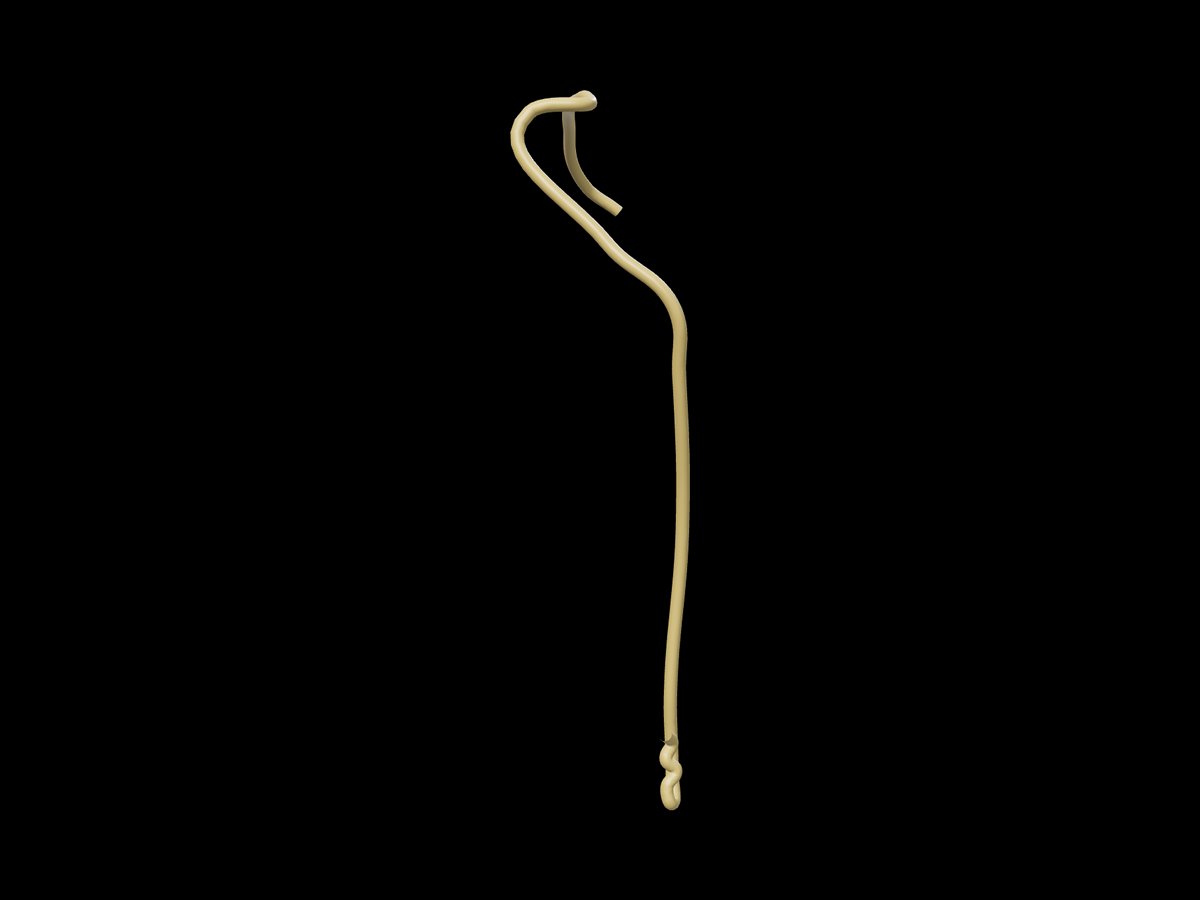
The ductus (vas) deferens is a firm muscular tube that carries sperm from the epididymis up through the groin and into the pelvis to the prostate.
Other names: Canal déférent (French) · Conducto deferente (Spanish)
Key facts
- Type
- Male reproductive duct
- Arterial supply
- Artery to the ductus deferens (from the vesical arteries)
- Course
- Begins at the tail of the epididymis, ascends in the spermatic cord through the inguinal canal, crosses over the external iliac vessels and the ureter, and joins the duct of the seminal gland behind the bladder to form the ejaculatory duct; its end widens into the ampulla.
- Function
- Propels sperm during ejaculation by strong muscle contractions.
Surface anatomy
Felt as a firm cord, like a piece of string, in the upper scrotum.
Clinical notes
- Vasectomy cuts or seals it for permanent contraception
- It is absent on both sides in most men with cystic fibrosis
Quick answers
What does the ductus deferens do?
Propels sperm during ejaculation by strong muscle contractions.
What is the blood supply of the ductus deferens?
Artery to the ductus deferens (from the vesical arteries)
Notes written for anatmy3d and checked against Gray’s Anatomy, Moore’s Clinically Oriented Anatomy and Netter. Last reviewed .