ArteriesSystemic arteries
Maxillary artery
Arteria maxillaris
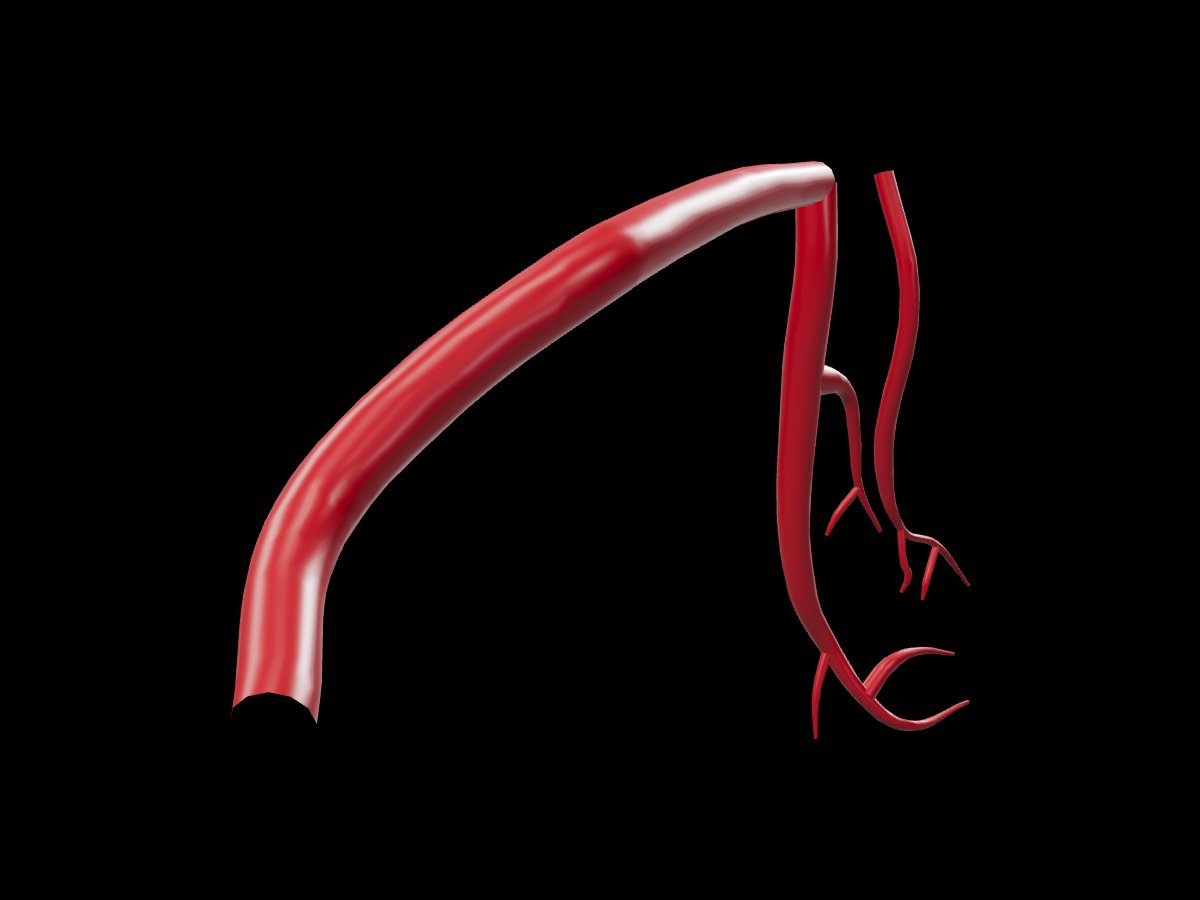
The maxillary artery is the larger end branch of the external carotid artery. It runs deep into the face and supplies the jaws, teeth, muscles of chewing, palate, nose and the dura of the skull.
Other names: Arteria maxillaris (Latin) · Artère maxillaire (French) · Arteria maxilar (Spanish) · Artéria maxilar (Portuguese)
Key facts
- Type
- Muscular artery
- Supplies
- Jaws and teeth, muscles of mastication, palate, nasal cavity, middle ear and dura mater
- Branches
- First (mandibular) part: deep auricular, anterior tympanic, middle meningeal, accessory meningeal, inferior alveolar
- Second (pterygoid) part: deep temporal, pterygoid, masseteric, buccal
- Third (pterygopalatine) part: posterior superior alveolar, infra-orbital, descending palatine, artery of pterygoid canal, pharyngeal, sphenopalatine
- Course
- Begins behind the neck of the mandible, passes forward through the infratemporal fossa (superficial or deep to lateral pterygoid) and enters the pterygopalatine fossa, where it ends as the sphenopalatine artery.
- Function
- Carries oxygen-rich blood deep into the face through the infratemporal and pterygopalatine fossae, supplying the jaws, teeth, chewing muscles, palate, nose, middle ear and dura.
Clinical notes
- Severe nosebleeds from the back of the nose come from its sphenopalatine branch and may be treated by endoscopic tying or embolisation
Quick answers
What is the course of the maxillary artery?
Begins behind the neck of the mandible, passes forward through the infratemporal fossa (superficial or deep to lateral pterygoid) and enters the pterygopalatine fossa, where it ends as the sphenopalatine artery.
What are the branches of the maxillary artery?
- First (mandibular) part: deep auricular, anterior tympanic, middle meningeal, accessory meningeal, inferior alveolar
- Second (pterygoid) part: deep temporal, pterygoid, masseteric, buccal
- Third (pterygopalatine) part: posterior superior alveolar, infra-orbital, descending palatine, artery of pterygoid canal, pharyngeal, sphenopalatine
What does the maxillary artery supply?
Jaws and teeth, muscles of mastication, palate, nasal cavity, middle ear and dura mater
Notes written for anatmy3d and checked against Gray’s Anatomy, Moore’s Clinically Oriented Anatomy and Netter. Last reviewed .