Maxillary nerve
Nervus maxillaris
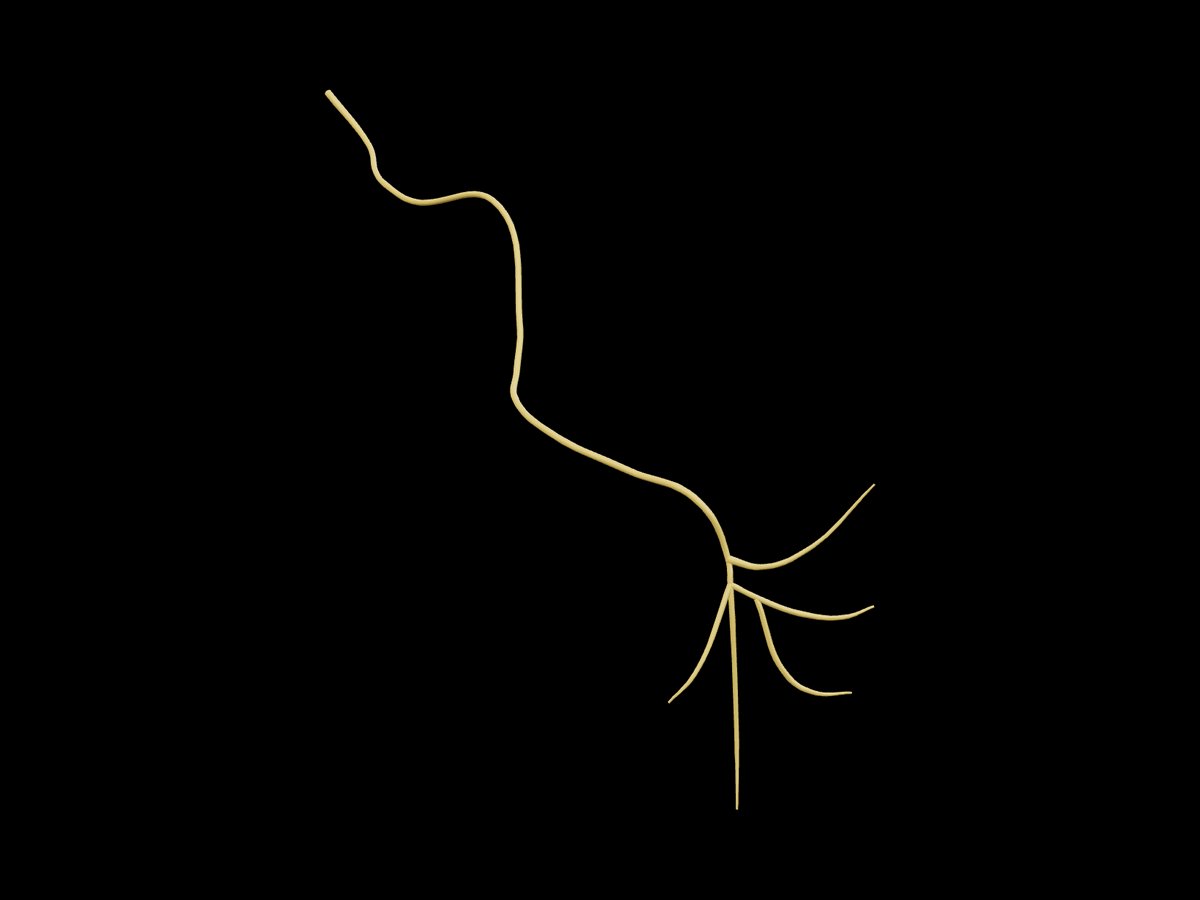
The maxillary nerve (V2) is the second division of the trigeminal nerve. It carries sensation from the cheek, upper lip, upper teeth, palate and nose.
Other names: Nervus maxillaris (Latin) · Nerf maxillaire (French) · Nervio maxilar (Spanish) · Nervo maxilar (Portuguese)
Key facts
- Type
- Division of cranial nerve V (sensory)
- Branches
- Meningeal branch, zygomatic nerve, ganglionic branches to the pterygopalatine ganglion, posterior superior alveolar nerves, infra-orbital nerve (with middle and anterior superior alveolar branches)
- Course
- Runs in the lower side wall of the cavernous sinus, leaves the skull through the foramen rotundum, crosses the pterygopalatine fossa and enters the orbit through the inferior orbital fissure as the infra-orbital nerve.
- Function
- Sensation of the mid-face, lower eyelid, side of the nose, upper lip, upper teeth and gums, palate and nasal cavity.
Clinical notes
- Numbness of the cheek and upper lip after a cheekbone or orbital floor fracture suggests damage to the infra-orbital nerve
- Upper teeth are numbed by injections around its alveolar branches
Quick answers
What is the course of the maxillary nerve?
Runs in the lower side wall of the cavernous sinus, leaves the skull through the foramen rotundum, crosses the pterygopalatine fossa and enters the orbit through the inferior orbital fissure as the infra-orbital nerve.
What does the maxillary nerve do?
Sensation of the mid-face, lower eyelid, side of the nose, upper lip, upper teeth and gums, palate and nasal cavity.
What are the branches of the maxillary nerve?
Meningeal branch, zygomatic nerve, ganglionic branches to the pterygopalatine ganglion, posterior superior alveolar nerves, infra-orbital nerve (with middle and anterior superior alveolar branches)
Notes written for anatmy3d and checked against Gray’s Anatomy, Moore’s Clinically Oriented Anatomy and Netter. Last reviewed .