Hypoglossal nerve (XII)
Nervus hypoglossus (XII)
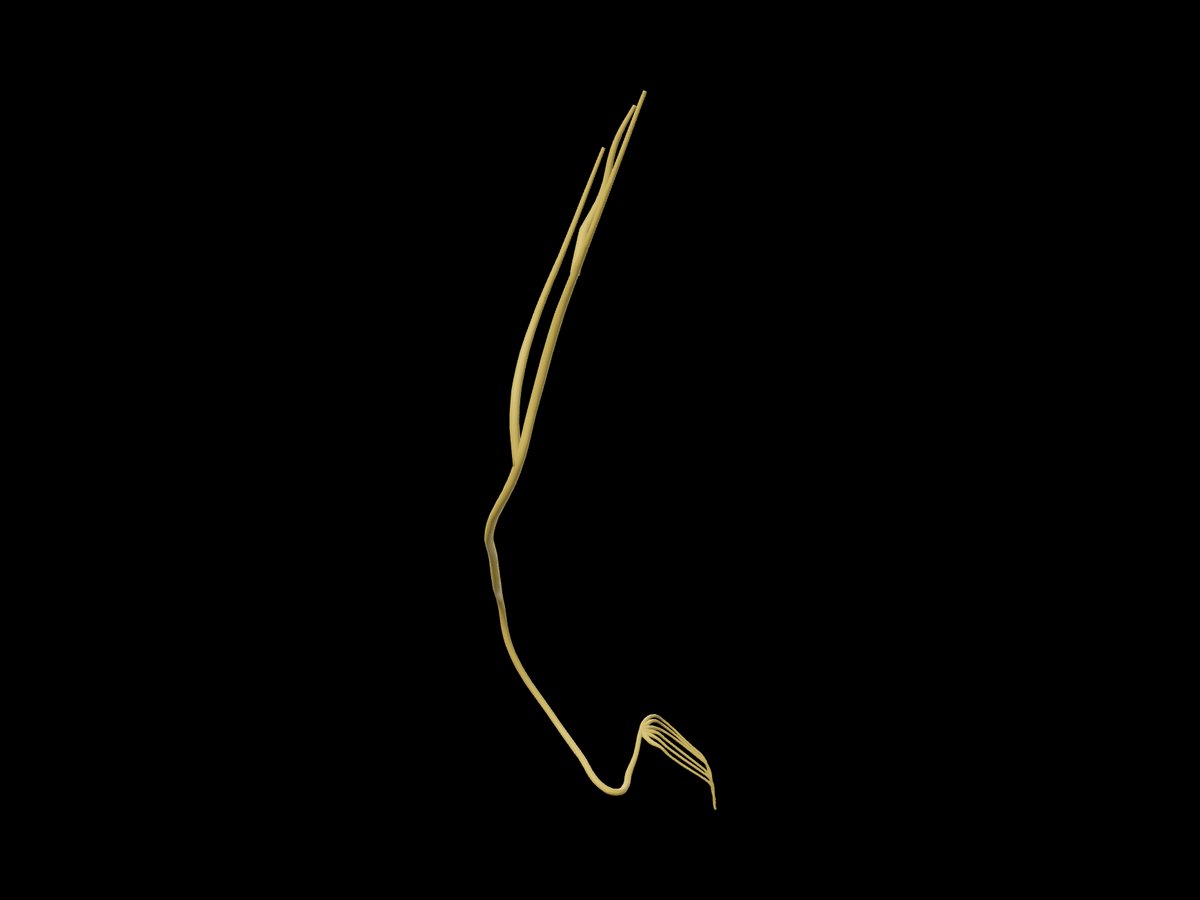
The hypoglossal nerve controls the muscles of the tongue.
Other names: Nervus hypoglossus (XII) (Latin) · Nerf hypoglosse (XII) (French) · Nervio hipogloso (XII) (Spanish) · Nervo hipoglosso (XII) (Portuguese)
Key facts
- Type
- Cranial nerve XII (motor)
- Course
- Leaves the medulla between the pyramid and olive, exits the skull through the hypoglossal canal, descends between the internal carotid artery and internal jugular vein, loops forward below the posterior belly of digastric and enters the tongue above the hyoid.
- Function
- Moves the tongue for speech, chewing and swallowing (all tongue muscles except palatoglossus).
Clinical notes
- Damage makes the tongue point towards the injured side when stuck out, with wasting on that side
- A hypoglossal nerve stimulator is used to treat some cases of obstructive sleep apnoea
- At risk in carotid endarterectomy and neck surgery
Quick answers
What is the course of the hypoglossal nerve (XII)?
Leaves the medulla between the pyramid and olive, exits the skull through the hypoglossal canal, descends between the internal carotid artery and internal jugular vein, loops forward below the posterior belly of digastric and enters the tongue above the hyoid.
What does the hypoglossal nerve (XII) do?
Moves the tongue for speech, chewing and swallowing (all tongue muscles except palatoglossus).
Notes written for anatmy3d and checked against Gray’s Anatomy, Moore’s Clinically Oriented Anatomy and Netter. Last reviewed .