Trochlear nerve (IV)
Nervus trochlearis (IV)
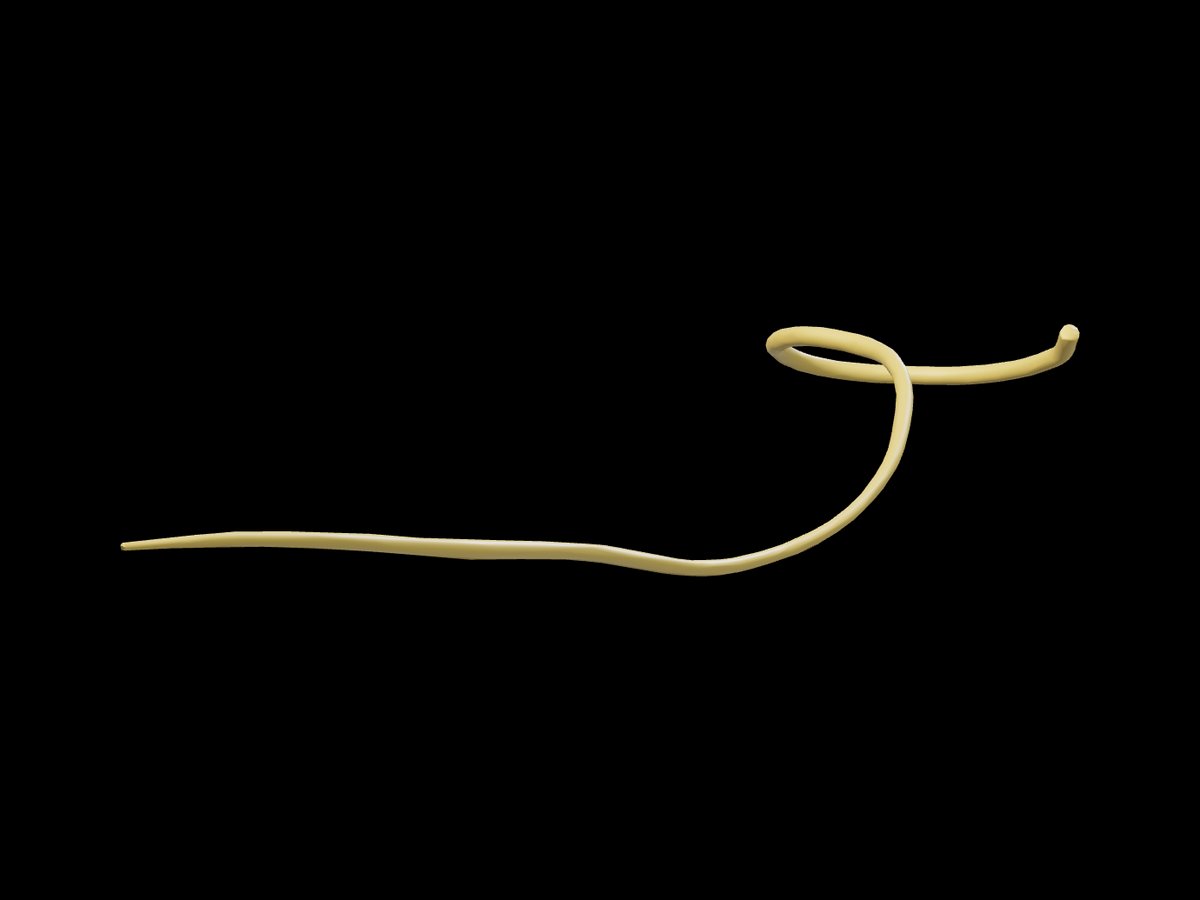
The trochlear nerve supplies a single eye muscle, the superior oblique. It is the thinnest cranial nerve and the only one that leaves the back of the brainstem.
Other names: Nervus trochlearis (IV) (Latin) · Nerf trochléaire (IV) (French) · Nervio troclear (IV) (Spanish) · Nervo troclear (IV) (Portuguese)
Key facts
- Type
- Cranial nerve IV (motor)
- Course
- Its fibres cross to the opposite side before leaving the back of the brainstem just below the inferior colliculus; it then winds around the midbrain, runs forward in the side wall of the cavernous sinus and enters the orbit through the superior orbital fissure above the eye muscle cone.
- Function
- Supplies the superior oblique muscle, which rotates the eye inwards and moves it down and slightly out; its downward pull is strongest when the eye is turned in, which is how it is tested.
Clinical notes
- Its long, thin course makes it vulnerable in head injury; palsy causes vertical double vision, worse when looking down (for example on stairs), and a head tilt away from the affected side
Quick answers
What is the course of the trochlear nerve (IV)?
Its fibres cross to the opposite side before leaving the back of the brainstem just below the inferior colliculus; it then winds around the midbrain, runs forward in the side wall of the cavernous sinus and enters the orbit through the superior orbital fissure above the eye muscle cone.
What does the trochlear nerve (IV) do?
Supplies the superior oblique muscle, which rotates the eye inwards and moves it down and slightly out; its downward pull is strongest when the eye is turned in, which is how it is tested.
Notes written for anatmy3d and checked against Gray’s Anatomy, Moore’s Clinically Oriented Anatomy and Netter. Last reviewed .