Arytenoid cartilage
Cartilago arytenoidea
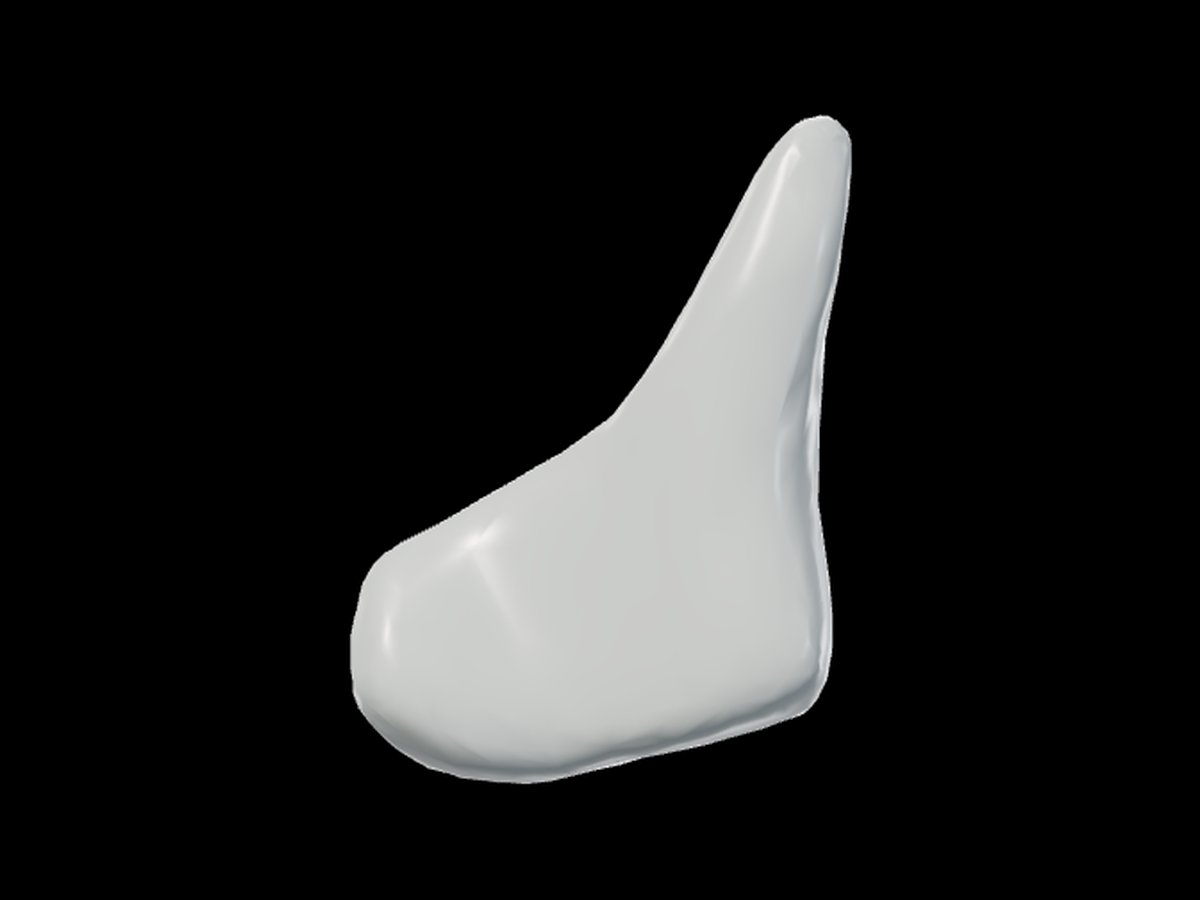
The arytenoid cartilages are a pair of small pyramid-shaped cartilages on the top of the cricoid lamina. The vocal folds attach to them, and their gliding and rotating open and close the vocal folds for breathing and speaking.
Other names: Cartilago arytenoidea (Latin) · Cartilage aryténoïde (French) · Cartílago aritenoides (Spanish) · Cartilagem aritenóide (Portuguese)
Key facts
- Type
- Hyaline and elastic cartilage (laryngeal)
- Nerve supply
- Recurrent laryngeal nerve
- Arterial supply
- Laryngeal arteries
- Articulations
- Cricoid cartilage (crico-arytenoid joints); corniculate cartilages
- Ligaments
- Vocal ligament, vestibular ligament, posterior crico-arytenoid ligament
- Movements
- Rotating and sliding at the crico-arytenoid joints: posterior crico-arytenoids open the vocal folds (the only abductors); lateral crico-arytenoids and arytenoid muscles close them
- Ossification
- Begins to ossify in adulthood
- Function
- Its vocal process anchors the vocal ligament and its muscular process the crico-arytenoid muscles, so its rotating and gliding on the cricoid open the vocal folds for breathing and close them for speech and swallowing
Location and relations
At the back of the larynx, sitting on the upper border of the cricoid lamina.
Parts and features
- Apex, carrying the corniculate cartilage
- Vocal process (pointing forwards), attaching the vocal ligament
- Muscular process (pointing sideways), attaching the posterior and lateral crico-arytenoid muscles
Surface anatomy
Seen at the back of the larynx on laryngoscopy as two bumps.
Landmarks on the arytenoid cartilage
- Anterolateral surface of arytenoid cartilage
- Apex of arytenoid cartilage
- Arcuate crest
- Articular surface of arytenoid cartilage
- Base of arytenoid cartilage
- Colliculus of arytenoid cartilage
- Medial surface of arytenoid cartilage
- Muscular process
- Oblong fovea
- Posterior surface of arytenoid cartilage
- Triangular fovea
- Vocal process
Clinical notes
- Arytenoid dislocation can follow difficult intubation, causing hoarseness
- Rheumatoid arthritis can fix the crico-arytenoid joints
Quick answers
Where is the arytenoid cartilage located?
At the back of the larynx, sitting on the upper border of the cricoid lamina.
What does the arytenoid cartilage articulate with?
Cricoid cartilage (crico-arytenoid joints); corniculate cartilages
When does the arytenoid cartilage ossify?
Begins to ossify in adulthood
What is the blood supply of the arytenoid cartilage?
Laryngeal arteries
What does the arytenoid cartilage do?
Its vocal process anchors the vocal ligament and its muscular process the crico-arytenoid muscles, so its rotating and gliding on the cricoid open the vocal folds for breathing and close them for speech and swallowing
Notes written for anatmy3d and checked against Gray’s Anatomy, Moore’s Clinically Oriented Anatomy and Netter. Last reviewed .