Digestive systemDigestive canal
Jejunum
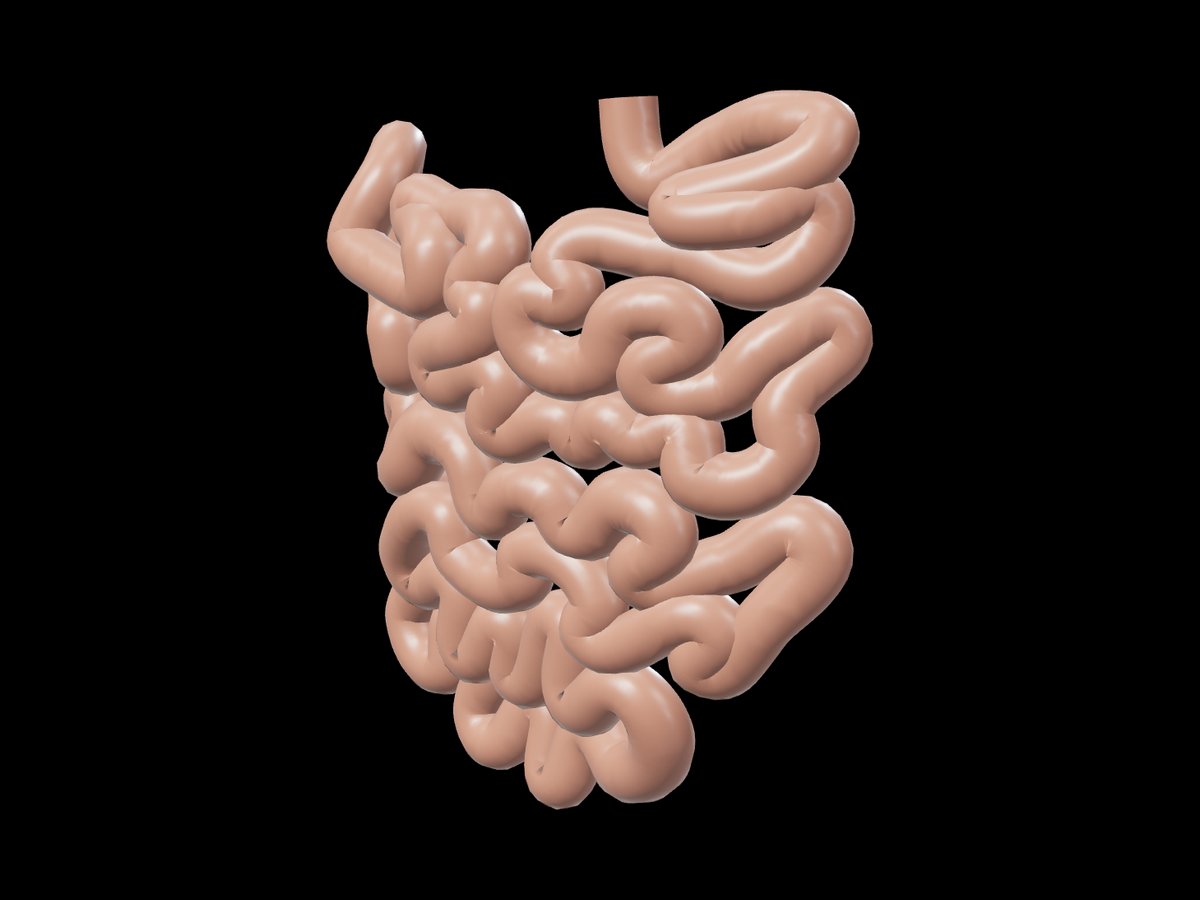
The jejunum is the middle section of the small intestine, between the duodenum and the ileum. It is where most nutrients are absorbed.
Other names: Jéjunum (French) · Yeyuno (Spanish) · Jejuno (Portuguese)
Key facts
- Type
- Part of the small intestine
- Nerve supply
- Vagus nerves and superior mesenteric plexus
- Arterial supply
- Jejunal branches of the superior mesenteric artery
- Function
- Absorbs sugars, amino acids, fats, vitamins and water.
Location and relations
Mostly in the upper left abdomen, suspended by the mesentery; it makes up about two-fifths of the small intestine beyond the duodenum.
Parts and features
Thick wall with many circular folds, few long arterial arcades and long straight arteries (vasa recta)
Clinical notes
- Its loops are used to rebuild the digestive tract after stomach, pancreas or bile duct surgery (Roux-en-Y loop)
Quick answers
Where is the jejunum located?
Mostly in the upper left abdomen, suspended by the mesentery; it makes up about two-fifths of the small intestine beyond the duodenum.
What does the jejunum do?
Absorbs sugars, amino acids, fats, vitamins and water.
What is the nerve supply of the jejunum?
Vagus nerves and superior mesenteric plexus
What is the blood supply of the jejunum?
Jejunal branches of the superior mesenteric artery
Notes written for anatmy3d and checked against Gray’s Anatomy, Moore’s Clinically Oriented Anatomy and Netter. Last reviewed .