Digestive systemDigestive system
Pancreas
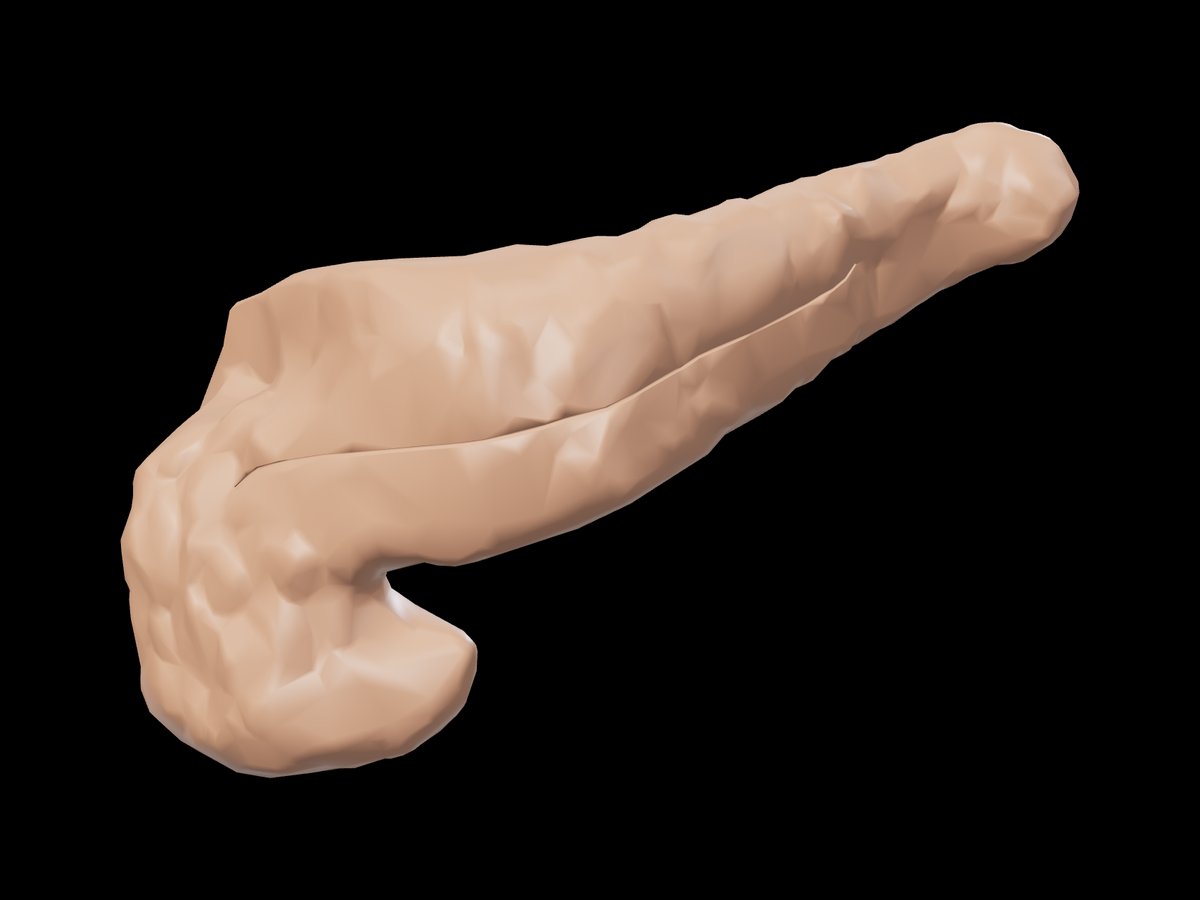
The pancreas is a long gland behind the stomach. It makes digestive enzymes for the intestine and hormones, including insulin, for the blood.
Other names: Pancréas (French) · Páncreas (Spanish) · Pâncreas (Portuguese)
Key facts
- Type
- Mixed exocrine and endocrine gland
- Nerve supply
- Vagus nerves and coeliac plexus; pain is felt through to the back
- Arterial supply
- Splenic and pancreaticoduodenal arteries
- Function
- Digests proteins, fats and carbohydrates through its enzymes and controls blood sugar through its hormones.
Location and relations
Across the back of the upper abdomen at L1–L2, behind the stomach and lesser sac; its head lies in the curve of the duodenum and its tail reaches the spleen.
Parts and features
- Head with uncinate process, neck, body and tail
- Exocrine acini producing enzymes
- Islets of Langerhans producing insulin, glucagon and somatostatin
Clinical notes
- Acute pancreatitis, usually from gallstones or alcohol, causes severe upper abdominal pain radiating to the back
- Pancreatic cancer often presents late, with weight loss or painless jaundice
- Loss of insulin-producing cells causes type 1 diabetes
Quick answers
Where is the pancreas located?
Across the back of the upper abdomen at L1–L2, behind the stomach and lesser sac; its head lies in the curve of the duodenum and its tail reaches the spleen.
What does the pancreas do?
Digests proteins, fats and carbohydrates through its enzymes and controls blood sugar through its hormones.
What is the nerve supply of the pancreas?
Vagus nerves and coeliac plexus; pain is felt through to the back
What is the blood supply of the pancreas?
Splenic and pancreaticoduodenal arteries
Notes written for anatmy3d and checked against Gray’s Anatomy, Moore’s Clinically Oriented Anatomy and Netter. Last reviewed .